How to Build a Winning Business Strategy? (5 Steps)
A powerful business strategy is not just a plan—it is the engine that drives long-term success, growth, and sustainability. Whether you’re launching a startup, running a growing small business, or steering a large organization, a winning strategy helps you define your direction, allocate resources intelligently, and outperform competitors. But what makes a strategy truly effective?
In today’s competitive market, businesses must be clear, flexible, customer-centric, and data-driven. A winning business strategy isn’t created overnight; it requires structured planning and practical execution. In this guide, we’ll break down the five essential steps to build an effective business strategy that delivers measurable results.
Step 1: Define Your Vision, Mission, and Core Values
Every successful business strategy begins with a clear foundation. Before setting goals or investing resources, you must understand why your business exists and where it is heading.
Define Your Vision
Your vision outlines your future aspirations. It answers the question:
“Where do we want to be in the next 5–10 years?”
An effective vision should inspire your team and give your business direction.
Craft Your Mission
Your mission is about the present. It defines what your business does, whom it serves, and what value it delivers.
It answers:
“What do we do, and why do we do it?”
Set Your Core Values
Core values represent the beliefs that guide your decisions, culture, and customer relationships. Examples include:
- Integrity
- Innovation
- Customer commitment
- Accountability
- Sustainability
Why this step matters:
A business without a defined purpose loses focus. Clear vision, mission, and values act as a roadmap for future strategies, operations, and decisions.
How to Build a Winning Business Strategy?
Step 2: Analyze Your Market, Competitors, and Customers
A strategy without research is simply guesswork. To create a winning business strategy, you must understand the external environment influencing your business.
Conduct a SWOT Analysis
SWOT reveals your:
- Strengths – internal advantages
- Weaknesses – internal challenges
- Opportunities – external possibilities
- Threats – external risks
This helps you identify where your business stands today.
Understand Your Target Market
You must know:
- Who your ideal customers are
- What they want
- Their pain points
- Their purchasing behavior
Using surveys, analytics, and customer feedback strengthens strategic decisions.
Study Your Competitors
Competitive analysis gives insight into:
- What competitors are doing well
- Where they are failing
- What unique value you can offer
Evaluate competitors’ products, pricing, marketing efforts, customer reviews, and market positioning.
Monitor Industry Trends
Markets change fast. Stay aware of:
- Emerging technologies
- Economic shifts
- Changing customer expectations
- New regulations
Why this step matters:
You cannot design a winning strategy without knowing the battlefield. Market research ensures your strategy is realistic, relevant, and competitive.
How to Build a Winning Business Strategy?
Step 3: Set SMART Goals and KPIs to Guide Your Strategy
Goals transform planning into action. But vague goals like “increase sales” or “grow the business” don’t work. Winning businesses set SMART goals—Specific, Measurable, Achievable, Relevant, and Time-bound.
Examples of SMART Goals
- Increase online sales by 30% in the next 12 months
- Reduce operational costs by 15% within six months
- Acquire 500 new customers by Q4
- Launch a new product line by September
Set KPIs (Key Performance Indicators)
KPIs help track progress. Common KPIs include:
- Monthly revenue
- Customer acquisition cost (CAC)
- Customer lifetime value (CLV)
- Conversion rate
- Market share
- Employee productivity
Align Goals With Your Business’s Vision
Your goals must connect to your long-term mission. Every project, campaign, or investment should contribute to the larger purpose.
Why this step matters:
If you can’t measure it—you can’t improve it. SMART goals and KPIs help you monitor performance, stay focused, and make informed decisions.
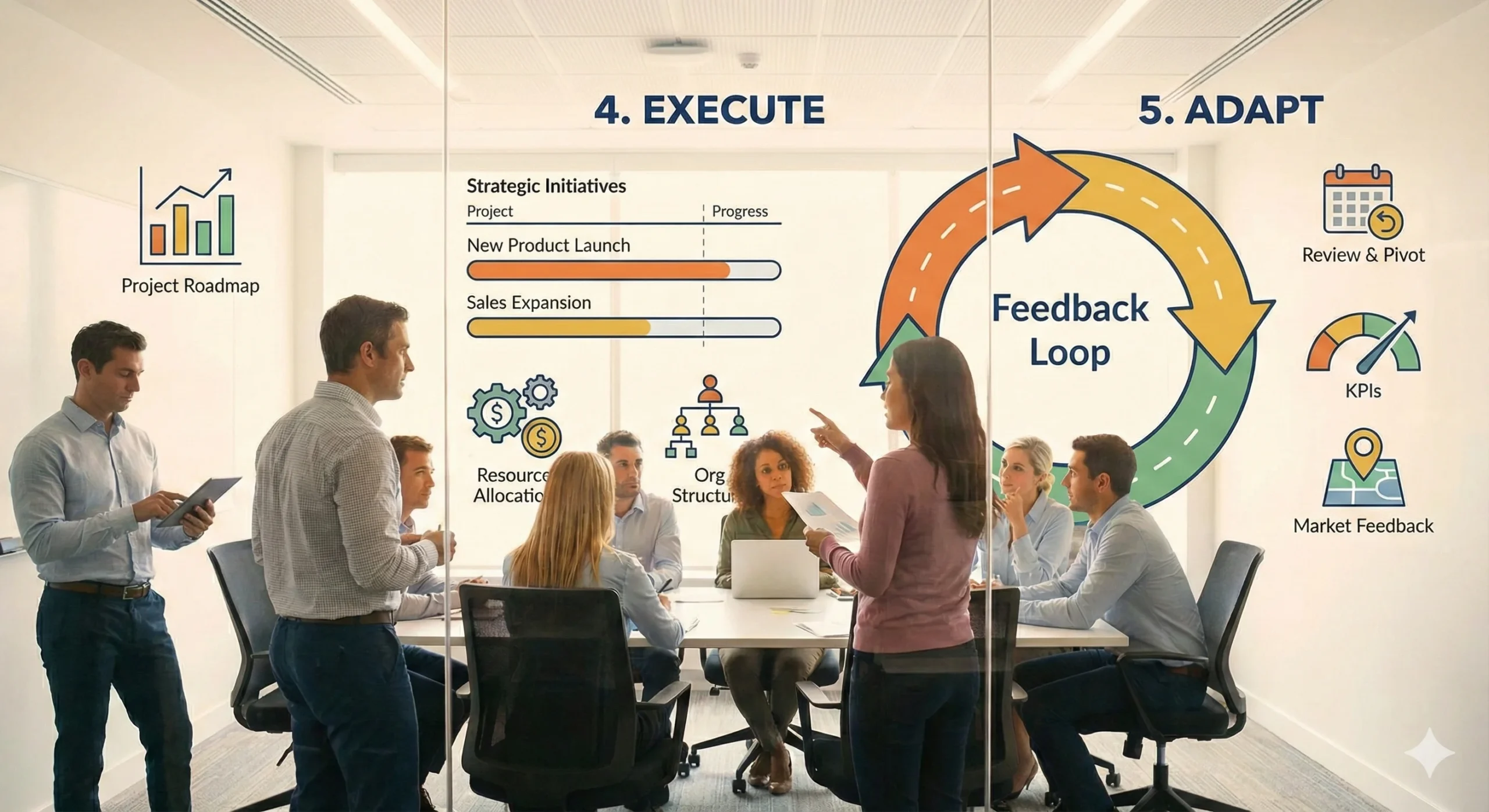
Step 4: Create a Clear Action Plan and Strategic Roadmap
Once you have goals and research insights, the next step is to build a practical action plan. This is where strategy becomes execution.
Develop Strategic Initiatives
Strategic initiatives are the major projects or programs that will help you achieve your goals. For example:
- Launching a digital marketing campaign
- Improving customer service processes
- Expanding into a new market
- Training employees on new technologies
- Building partnerships with other brands
Break Your Initiatives Into Actionable Tasks
Your roadmap should include:
- What needs to be done
- Who is responsible
- Deadlines
- Required resources
- Expected outcomes
This makes your team accountable and keeps operations running smoothly.
Allocate Resources Wisely
Resources include:
- Budget
- Workforce
- Technology
- Time
Prioritize initiatives that offer the highest ROI.
Plan for Risks
Every strategic plan should include risk management:
- Identify potential obstacles
- Create contingency plans
- Adjust timelines when necessary
Why this step matters:
A clearly defined action plan ensures smooth execution. Without one, even the most brilliant strategy will fail due to confusion, misalignment, or poor resource allocation.
Step 5: Monitor, Evaluate, and Continuously Improve
A winning business strategy is not fixed—it evolves. The final step is to monitor your results, evaluate performance, and adapt to changes.
Track KPIs Regularly
Weekly, monthly, and quarterly reviews help you identify:
- What is working
- What is not working
- What needs to be adjusted
Use Data to Make Decisions
Data analytics provides insights into:
- Customer behavior
- Marketing effectiveness
- Sales trends
- Operational efficiency
Never rely on assumptions. Let data guide every improvement.
Encourage Feedback
Feedback can come from:
- Employees
- Customers
- Partners
- Investors
This helps refine your approach and uncover blind spots.
Stay Flexible
The market evolves quickly—your strategy should too. Be ready to:
- Redesign campaigns
- Improve products
- Change pricing
- Enter or exit markets
- Adopt new technologies
Why this step matters:
Continuous improvement ensures your business stays relevant and competitive. The ability to evolve determines your long-term success.
A Winning Business Strategy Starts With Smart Planning : How to Build a Winning Business Strategy?
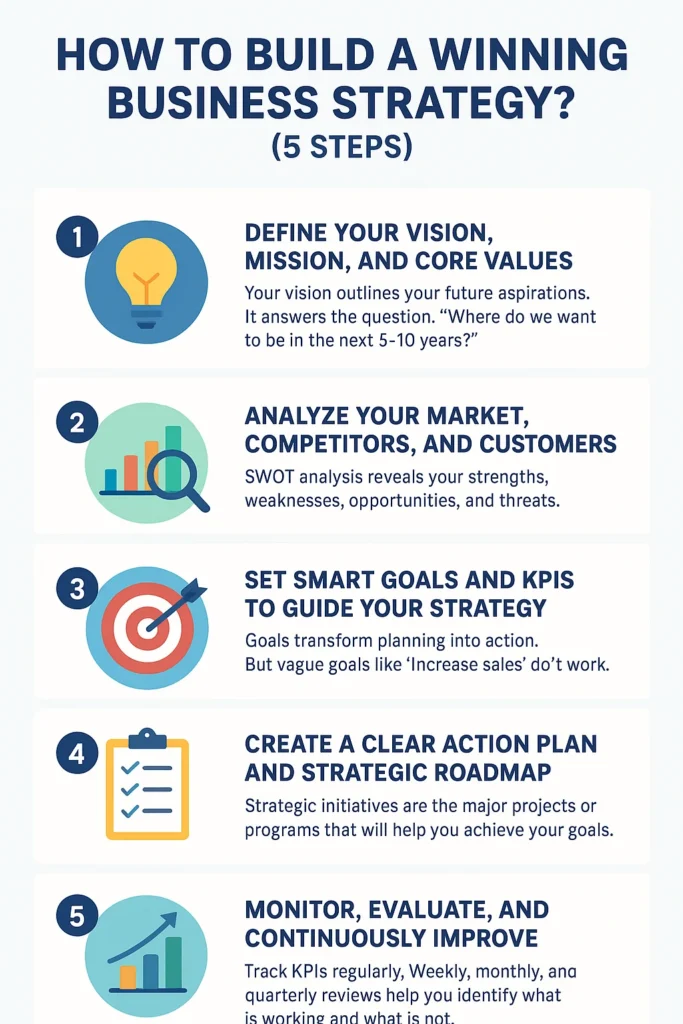
Building a winning business strategy may seem challenging, but with the right approach, it becomes an exciting journey toward growth and success. By following these five steps—defining your purpose, understanding your market, setting strategic goals, creating an action plan, and continuously improving—you create a clear, powerful direction for your business.
A strong strategy helps you:
- Make confident decisions
- Navigate challenges
- Outperform competitors
- Build customer trust
- Achieve sustainable growth
Remember, the best businesses are built on thoughtful planning, consistent execution, and ongoing innovation. Start applying these steps today, and you’ll be on your way to developing a strategic roadmap that leads to long-term success.