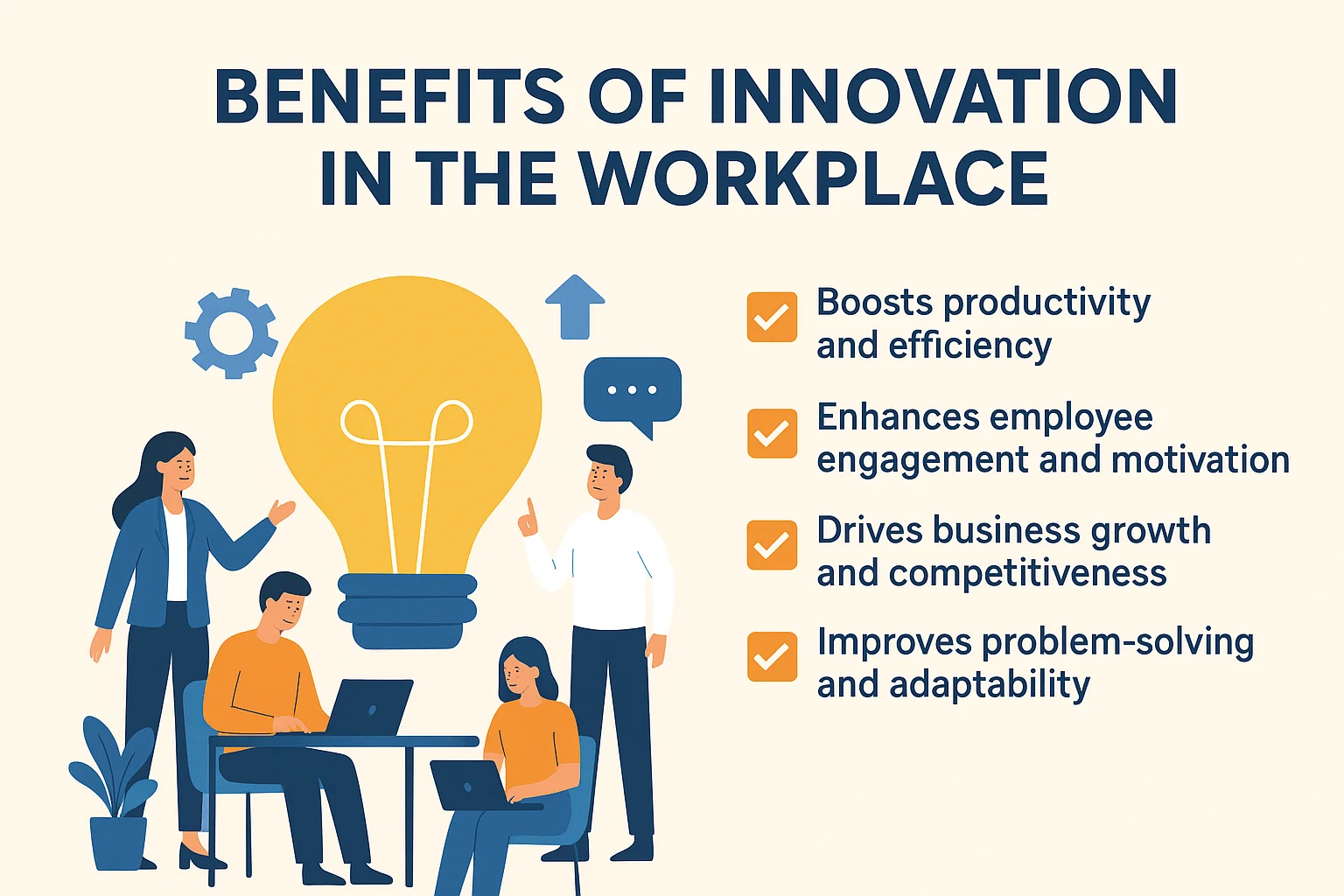
Benefits of Innovation in the Workplace: Why It Matters More Than Ever
Innovation is no longer something reserved only for tech giants or creative agencies. Today, every business—big or small—must innovate to survive, grow, and stay competitive. The workplace is evolving rapidly, shaped by digital transformation, shifting employee expectations, remote work trends, and global competition. Organizations that embrace innovation are more resilient, more efficient, and more attractive to customers and employees alike.
In this blog, we explore the key benefits of innovation in the workplace, how it improves operations, strengthens teams, and boosts long-term success. Whether you’re an entrepreneur, manager, or team lead, understanding these advantages can help you build a more forward-thinking workplace.
Benefits of Innovation in the Workplace
1. Innovation Boosts Productivity and Efficiency
One of the biggest advantages of workplace innovation is a noticeable increase in productivity. When employees are encouraged to think creatively, they naturally explore new ways of doing tasks faster and smarter. This often leads to improvements in systems, workflows, and tools.
How innovation boosts productivity:
- Automation of repetitive tasks frees employees to focus on strategic work.
- Improved internal processes reduce errors and delays.
- New technologies—like AI, project management tools, and analytics—streamline daily operations.
- Cross-department collaboration helps teams solve problems from multiple angles.
Companies that continuously innovate often report higher output with fewer resources, giving them a strong competitive edge.
2. Innovation Enhances Employee Engagement and Motivation
A workplace where innovation is valued tends to have more motivated, engaged, and satisfied employees. When people feel their ideas matter, they naturally become more invested in the company’s success.
Why this matters:
- Employees feel a sense of purpose when encouraged to share ideas.
- Innovative workplaces reduce monotony and inspire creativity.
- People are more likely to solve problems proactively.
- Recognition for innovative thinking strengthens loyalty and morale.
Engaged employees contribute more energy, creativity, and effort to their work. This ultimately leads to better performance, reduced turnover, and a more positive workplace environment.
3. Innovation Drives Business Growth and Competitiveness
No business can grow without improving its products, services, and processes. Innovation allows organizations to stay ahead of competitors, respond to market trends, and meet changing customer needs.
Examples of innovation-driven growth:
- Introducing new product features based on customer feedback.
- Launching digital services to meet modern expectations.
- Using data analytics for smarter business decisions.
- Adopting new marketing strategies like automation or personalization.
When businesses innovate consistently, they’re better able to:
- Attract new customers
- Retain existing customers
- Enter new markets
- Build a strong brand reputation
Innovation is the key to staying relevant in a fast-moving digital world.

4. Innovation Encourages Better Problem-Solving
Every workplace deals with challenges: operational issues, customer complaints, productivity gaps, or market shifts. Innovation encourages teams to think critically and develop effective, long-lasting solutions.
Instead of relying on outdated methods, employees look for:
- Root causes of problems
- Creative solutions
- Modern tools and technologies
- Smarter strategies
This mindset results in faster problem resolution, reduced operational costs, and improved overall performance.
5. Innovation Improves Customer Experience
Today’s customers expect convenience, personalization, and fast service. Companies that innovate in the workplace are better equipped to deliver exceptional customer experiences.
How innovation benefits customers:
- Faster response times through automation or AI support.
- Higher-quality products due to improved processes.
- Better communication across customer service teams.
- More personalized solutions based on data-driven insights.
Satisfied customers are more likely to:
- Return for repeat purchases
- Refer your business to others
- Leave positive reviews
- Stay loyal even if competitors offer similar products
Investing in innovation means investing in strong customer relationships.
6. Innovation Helps Attract and Retain Top Talent
Skilled professionals want to work in organizations that embrace new ideas, technology, and growth. Innovative workplaces are seen as exciting, progressive, and motivating.
What this means for employers:
- Easier recruitment of high-performing employees
- Higher retention rates among creative and ambitious workers
- Strong company culture built around collaboration and learning
- Increased internal mobility as employees gain diverse skills
A company known for innovation—and openness to employee ideas—naturally becomes a magnet for talent.
7. Innovation Reduces Costs and Increases Profitability
Many people think innovation is expensive, but it often helps businesses save money in the long run. By optimizing processes and adopting smart technologies, companies can reduce unnecessary expenses and increase profitability.
Cost-saving effects of innovation:
- Streamlined operations reduce waste.
- Automation lowers labor costs for repetitive tasks.
- Improved systems prevent costly errors.
- Energy-efficient technologies reduce utility bills.
- Better forecasting reduces overspending.
Organizations that innovate efficiently often operate with leaner budgets and higher profit margins.
8. Innovation Strengthens Adaptability and Resilience
The last few years have shown the world how quickly things can change. Whether it’s economic shifts, technological disruption, or unexpected crises, businesses must adapt quickly.
Innovation helps companies:
- Embrace change instead of fearing it
- Quickly pivot strategies when needed
- Explore new opportunities during uncertain times
- Overcome challenges with fresh ideas
A culture of innovation builds resilience, making organizations better prepared for the future.
9. Innovation Improves Collaboration and Teamwork
When employees are encouraged to brainstorm, experiment, and collaborate, teamwork becomes stronger. Innovation thrives when people from different departments and backgrounds come together to share ideas.
Benefits of collaborative innovation:
- Smarter decisions from diverse perspectives
- Stronger relationships between teams
- Breakthrough solutions that wouldn’t emerge in isolation
- A more inclusive and dynamic workplace culture
Collaborative innovation helps employees feel more connected and valued, leading to enhanced team performance.
10. Innovation Promotes Continuous Learning
Workplace innovation creates a culture where learning never stops. Employees are encouraged to upgrade their skills, explore new technologies, and embrace modern work practices.
Impact of continuous learning:
- Better performance and adaptability
- Stronger leadership development
- Growth in employee confidence and capability
- A future-ready workforce
Continuous learning drives innovation—and innovation drives continuous learning, creating a powerful cycle of growth.
How to Promote Innovation in the Workplace
Understanding the benefits is important, but promoting innovation requires intentional action. Here are a few effective strategies businesses can adopt:
1. Encourage open communication
Allow employees to share ideas freely without judgment.
2. Provide the right tools and technology
Modern tools empower teams to innovate effectively.
3. Reward creativity
Recognize employees when they bring valuable ideas or improvements.
4. Support training and development
Offer workshops, courses, and skill-building programs.
5. Create a culture of experimentation
Allow teams to test ideas and learn from failures.
6. Lead by example
Managers and leaders must demonstrate innovative thinking themselves.
Innovation in the workplace is no longer a “nice-to-have”—it’s a must-have for any business that wants long-term success. From boosting productivity and improving employee engagement to enhancing customer satisfaction and driving growth, innovation brings endless benefits.
Companies that invest in innovation build workplaces that are dynamic, resilient, and future-ready. Whether you’re leading a business, managing a team, or simply aiming to improve work culture, focusing on innovation can transform your entire organization.
Benefits of Innovation in the Workplace
In the modern world, the “we’ve always done it this way” mindset is a slow-motion car crash. Between remote work shifts and the breakneck speed of digital tools, the companies that thrive are the ones that treat new ideas like oxygen.
Here is what it actually looks like when a workplace chooses to innovate—and why it feels so much better for everyone involved.
1. It Kills the “Busywork” Monster
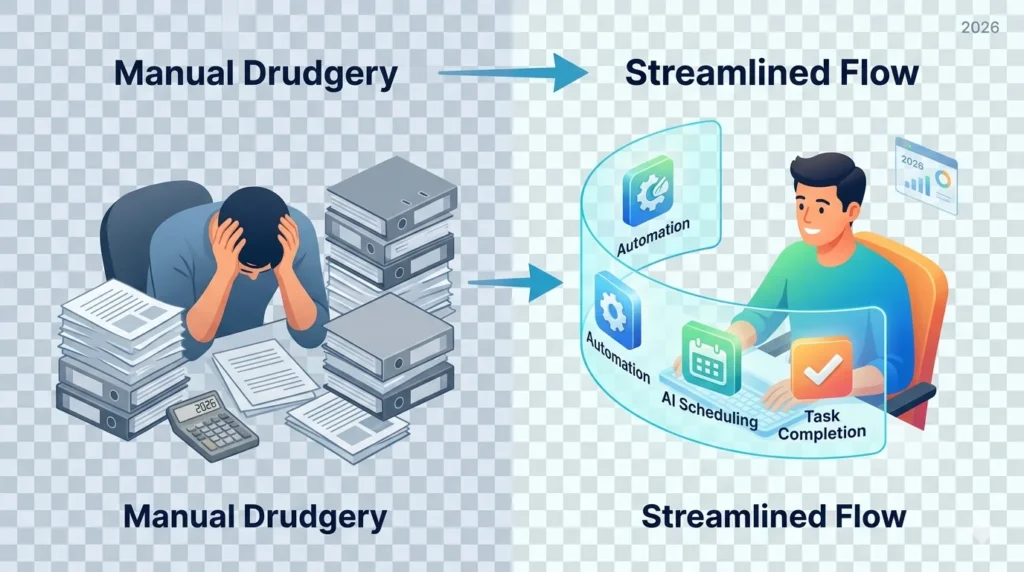
We’ve all been there: stuck in a loop of repetitive tasks that feel like they’re draining our souls. Innovation is the ultimate antidote to “grunt work.” When a team is encouraged to find a better way, they stop fighting with clunky spreadsheets and start using tools that actually work.
By automating the boring stuff, people finally have the headspace to do the strategic, creative work they were actually hired to do. Productivity isn’t about working more hours; it’s about making the hours you work actually count.
2. People Actually Want to Be There
There is a specific kind of energy in an innovative office. You can feel it. When employees know that a “crazy idea” won’t be laughed out of the room, they stop checking the clock and start engaging.
It turns a job into a mission. When people feel like they have a hand in building the future of the company, turnover drops. You aren’t just retaining staff; you’re building a tribe of problem-solvers who are genuinely invested in the win.
3. Solving Problems Before They Become Crises
Traditional workplaces are reactive—they wait for something to break, then try to fix it with an old hammer. Innovative workplaces are proactive. They look at a tiny friction point in a customer’s journey and reinvent the process before the customer even has a chance to complain. This mindset saves an incredible amount of money and stress in the long run.
4. The Magnet Effect for Talent
The best people in any industry don’t just want a paycheck; they want a playground. Top-tier talent gravitates toward environments where they can learn, experiment, and grow. If your company has a reputation for being stuck in 2010, you’ll struggle to hire the people who can take you into 2030. Innovation is your best recruiting tool.
5. Building “Shock Absorbers” for the Business
If the last few years taught us anything, it’s that the world can flip upside down in a weekend. Businesses that had already embraced digital innovation pivoted in days. Those that hadn’t… well, many of them aren’t here anymore. Innovation builds a resilient “muscle memory” that helps your team handle chaos without panicking.
People Also Ask (FAQ)
Is innovation always expensive?
Actually, no. Some of the best innovations are “process-based”—like changing how a meeting is run or how feedback is collected. These cost $0 but can save thousands in lost time.
How do I start innovating if my team is scared of change?
Start small. Reward the effort of an idea, even if the idea doesn’t work out. If people feel safe to fail on a small scale, they’ll eventually be brave enough to succeed on a large one.
Does innovation mean replacing people with AI?
Quite the opposite. True innovation uses technology to augment human potential. It’s about taking the “robot” out of the human so they can do more human things—like empathizing with customers or designing beautiful solutions.
How to Actually Make it Happen
You don’t need a massive R&D budget. You just need to:
- Listen more than you talk: Your frontline employees usually know exactly what’s broken.
- Give them the tools: Don’t ask for 21st-century results on 20th-century software.
- Celebrate the “Near Misses”: If someone tries a new way of doing things and it fails, don’t punish them. Analyze what was learned and move to the next experiment.
Authoritative References & Deep Dives
For those looking to dig deeper into the data behind these shifts, I highly recommend checking out:
- The Harvard Business Review’s collection on Managing Innovation.
- McKinsey & Company’s reports on The Innovation Commitment (which shows the direct link between innovation and outperforming the market).
- OECD’s research on Innovation and Productivity for a global economic perspective.
The bottom line? Innovation isn’t a department. It’s a culture. It’s the decision to wake up and ask, “Is there a better way to do this?” If you keep asking that question, growth isn’t just a goal—it’s an inevitability.