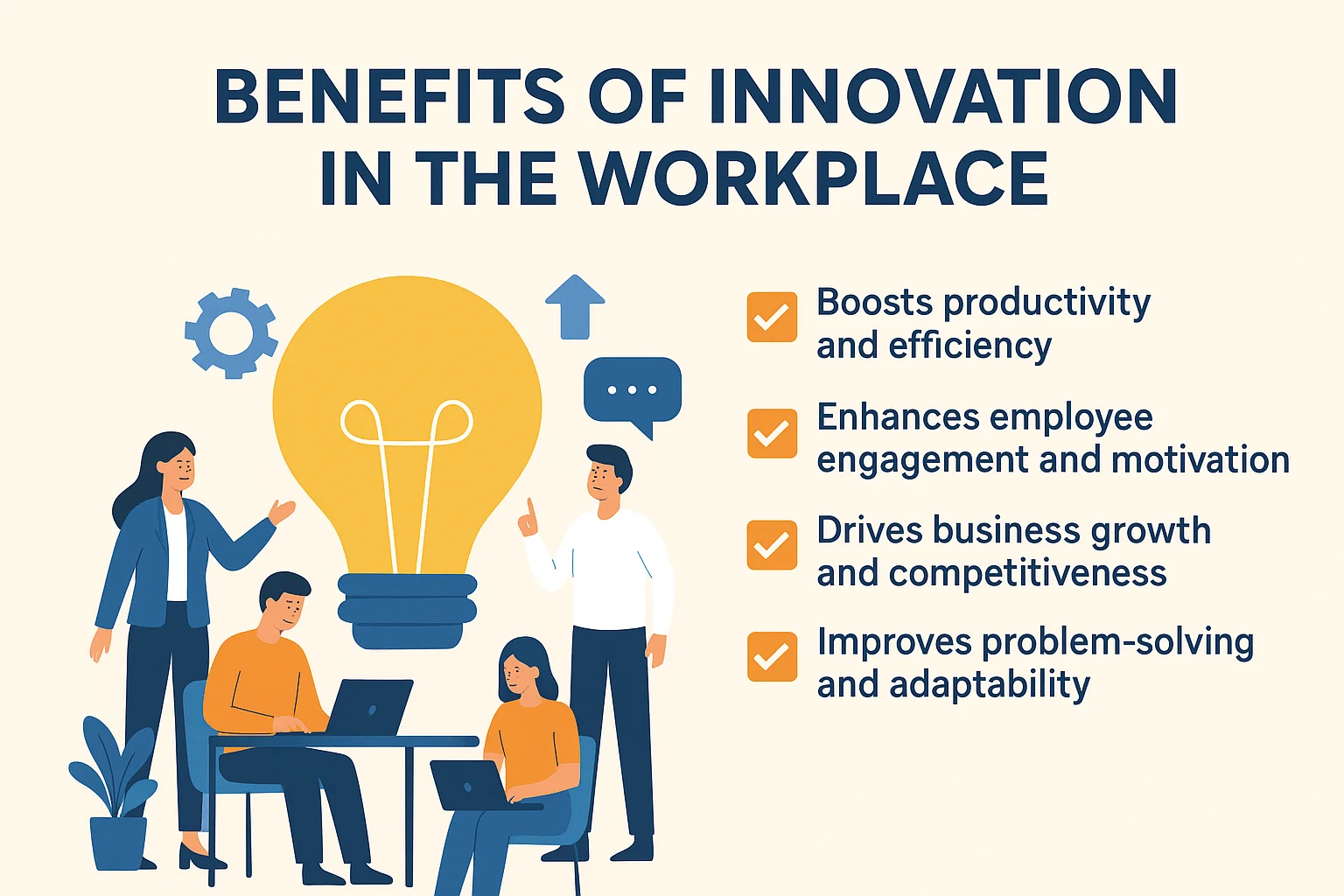
Benefits of Innovation in the Workplace: Why It Matters More Than Ever
Innovation is no longer something reserved only for tech giants or creative agencies. Today, every business—big or small—must innovate to survive, grow, and stay competitive. The workplace is evolving rapidly, shaped by digital transformation, shifting employee expectations, remote work trends, and global competition. Organizations that embrace innovation are more resilient, more efficient, and more attractive to customers and employees alike.
In this blog, we explore the key benefits of innovation in the workplace, how it improves operations, strengthens teams, and boosts long-term success. Whether you’re an entrepreneur, manager, or team lead, understanding these advantages can help you build a more forward-thinking workplace.
Benefits of Innovation in the Workplace
1. Innovation Boosts Productivity and Efficiency
One of the biggest advantages of workplace innovation is a noticeable increase in productivity. When employees are encouraged to think creatively, they naturally explore new ways of doing tasks faster and smarter. This often leads to improvements in systems, workflows, and tools.
How innovation boosts productivity:
- Automation of repetitive tasks frees employees to focus on strategic work.
- Improved internal processes reduce errors and delays.
- New technologies—like AI, project management tools, and analytics—streamline daily operations.
- Cross-department collaboration helps teams solve problems from multiple angles.
Companies that continuously innovate often report higher output with fewer resources, giving them a strong competitive edge.
2. Innovation Enhances Employee Engagement and Motivation
A workplace where innovation is valued tends to have more motivated, engaged, and satisfied employees. When people feel their ideas matter, they naturally become more invested in the company’s success.
Why this matters:
- Employees feel a sense of purpose when encouraged to share ideas.
- Innovative workplaces reduce monotony and inspire creativity.
- People are more likely to solve problems proactively.
- Recognition for innovative thinking strengthens loyalty and morale.
Engaged employees contribute more energy, creativity, and effort to their work. This ultimately leads to better performance, reduced turnover, and a more positive workplace environment.
3. Innovation Drives Business Growth and Competitiveness
No business can grow without improving its products, services, and processes. Innovation allows organizations to stay ahead of competitors, respond to market trends, and meet changing customer needs.
Examples of innovation-driven growth:
- Introducing new product features based on customer feedback.
- Launching digital services to meet modern expectations.
- Using data analytics for smarter business decisions.
- Adopting new marketing strategies like automation or personalization.
When businesses innovate consistently, they’re better able to:
- Attract new customers
- Retain existing customers
- Enter new markets
- Build a strong brand reputation
Innovation is the key to staying relevant in a fast-moving digital world.

4. Innovation Encourages Better Problem-Solving
Every workplace deals with challenges: operational issues, customer complaints, productivity gaps, or market shifts. Innovation encourages teams to think critically and develop effective, long-lasting solutions.
Instead of relying on outdated methods, employees look for:
- Root causes of problems
- Creative solutions
- Modern tools and technologies
- Smarter strategies
This mindset results in faster problem resolution, reduced operational costs, and improved overall performance.
5. Innovation Improves Customer Experience
Today’s customers expect convenience, personalization, and fast service. Companies that innovate in the workplace are better equipped to deliver exceptional customer experiences.
How innovation benefits customers:
- Faster response times through automation or AI support.
- Higher-quality products due to improved processes.
- Better communication across customer service teams.
- More personalized solutions based on data-driven insights.
Satisfied customers are more likely to:
- Return for repeat purchases
- Refer your business to others
- Leave positive reviews
- Stay loyal even if competitors offer similar products
Investing in innovation means investing in strong customer relationships.
6. Innovation Helps Attract and Retain Top Talent
Skilled professionals want to work in organizations that embrace new ideas, technology, and growth. Innovative workplaces are seen as exciting, progressive, and motivating.
What this means for employers:
- Easier recruitment of high-performing employees
- Higher retention rates among creative and ambitious workers
- Strong company culture built around collaboration and learning
- Increased internal mobility as employees gain diverse skills
A company known for innovation—and openness to employee ideas—naturally becomes a magnet for talent.
7. Innovation Reduces Costs and Increases Profitability
Many people think innovation is expensive, but it often helps businesses save money in the long run. By optimizing processes and adopting smart technologies, companies can reduce unnecessary expenses and increase profitability.
Cost-saving effects of innovation:
- Streamlined operations reduce waste.
- Automation lowers labor costs for repetitive tasks.
- Improved systems prevent costly errors.
- Energy-efficient technologies reduce utility bills.
- Better forecasting reduces overspending.
Organizations that innovate efficiently often operate with leaner budgets and higher profit margins.
8. Innovation Strengthens Adaptability and Resilience
The last few years have shown the world how quickly things can change. Whether it’s economic shifts, technological disruption, or unexpected crises, businesses must adapt quickly.
Innovation helps companies:
- Embrace change instead of fearing it
- Quickly pivot strategies when needed
- Explore new opportunities during uncertain times
- Overcome challenges with fresh ideas
A culture of innovation builds resilience, making organizations better prepared for the future.
9. Innovation Improves Collaboration and Teamwork
When employees are encouraged to brainstorm, experiment, and collaborate, teamwork becomes stronger. Innovation thrives when people from different departments and backgrounds come together to share ideas.
Benefits of collaborative innovation:
- Smarter decisions from diverse perspectives
- Stronger relationships between teams
- Breakthrough solutions that wouldn’t emerge in isolation
- A more inclusive and dynamic workplace culture
Collaborative innovation helps employees feel more connected and valued, leading to enhanced team performance.
Benefits of Innovation in the Workplace
10. Innovation Promotes Continuous Learning
Workplace innovation creates a culture where learning never stops. Employees are encouraged to upgrade their skills, explore new technologies, and embrace modern work practices.
Impact of continuous learning:
- Better performance and adaptability
- Stronger leadership development
- Growth in employee confidence and capability
- A future-ready workforce
Continuous learning drives innovation—and innovation drives continuous learning, creating a powerful cycle of growth.
How to Promote Innovation in the Workplace
Understanding the benefits is important, but promoting innovation requires intentional action. Here are a few effective strategies businesses can adopt:
1. Encourage open communication
Allow employees to share ideas freely without judgment.
2. Provide the right tools and technology
Modern tools empower teams to innovate effectively.
3. Reward creativity
Recognize employees when they bring valuable ideas or improvements.
4. Support training and development
Offer workshops, courses, and skill-building programs.
5. Create a culture of experimentation
Allow teams to test ideas and learn from failures.
6. Lead by example
Managers and leaders must demonstrate innovative thinking themselves.
Innovation in the workplace is no longer a “nice-to-have”—it’s a must-have for any business that wants long-term success. From boosting productivity and improving employee engagement to enhancing customer satisfaction and driving growth, innovation brings endless benefits.
Companies that invest in innovation build workplaces that are dynamic, resilient, and future-ready. Whether you’re leading a business, managing a team, or simply aiming to improve work culture, focusing on innovation can transform your entire organization.