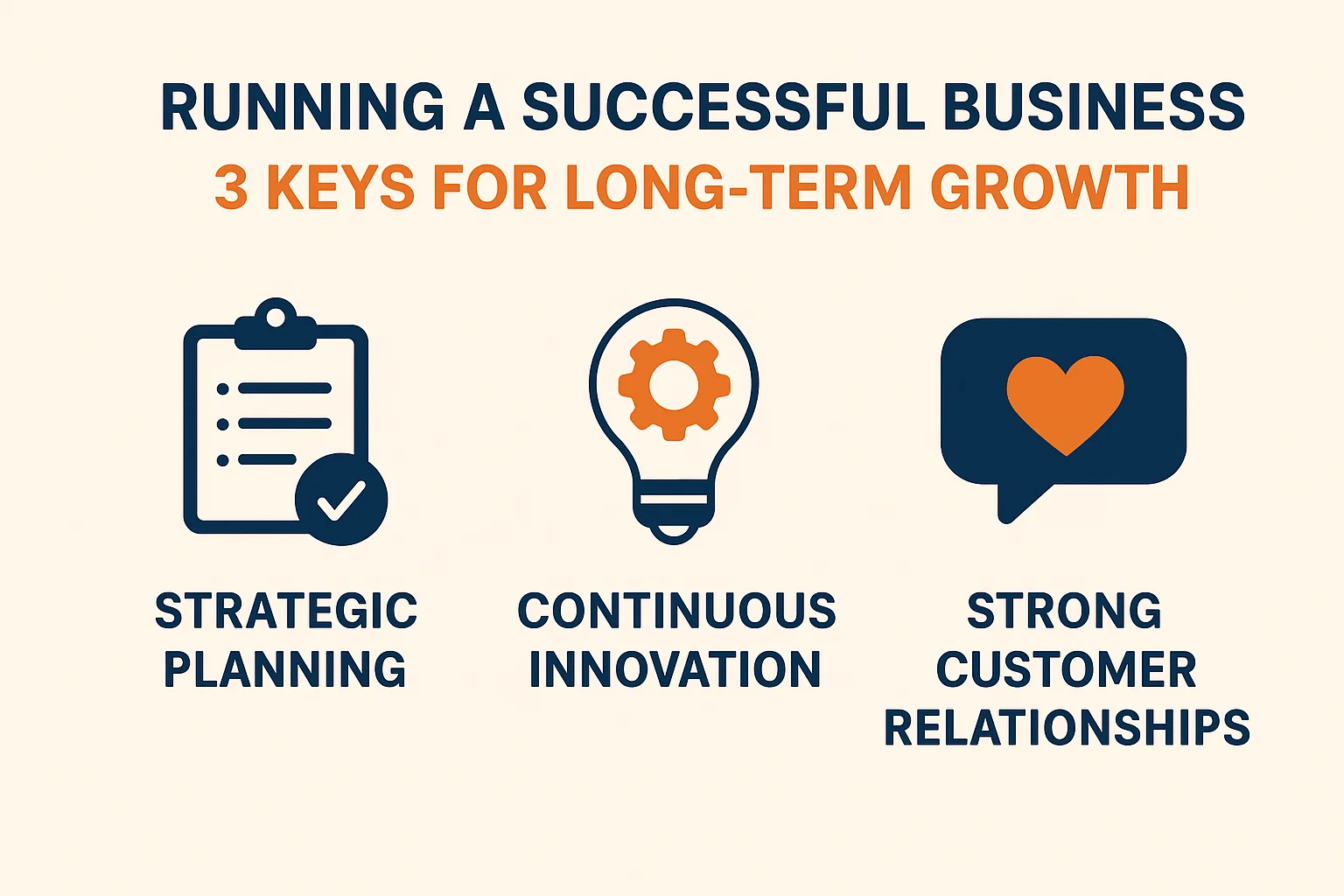
Running a Successful Business: 3 Keys for Long-Term Growth
In today’s rapidly changing business world, running a successful company is no longer just about generating quick profits. True success is measured by long-term growth, sustainability, and the ability to adapt to constant shifts in the market. Whether you’re a startup founder, small business owner, or seasoned entrepreneur, sustained growth comes from strong fundamentals—not shortcuts.
This blog breaks down the three most essential keys to long-term business success: Strategic Planning, Continuous Innovation, and Strong Customer Relationships. Master these, and you’ll build a business that doesn’t just survive—but thrives for years to come.
1. Strategic Planning: Building a Roadmap for Sustainable Success
Every successful business is built on a clear sense of direction. Strategic planning is the first and most critical key to achieving long-term growth because it sets your vision, outlines your goals, and helps you anticipate challenges before they arise.
Why Strategic Planning Matters
Without a strategy, a business can easily get lost in day-to-day tasks and short-term wins. A well-crafted plan acts like a compass—it guides every decision, from budgeting to marketing to hiring. Companies that plan proactively are better equipped to handle changes in customer behavior, industry trends, and global markets.
Key Components of Effective Strategic Planning
a. Define Your Mission, Vision, and Goals
A strong mission and vision statement provides clarity and helps every team member understand the purpose behind your business. Long-term goals give your company direction and help you measure progress.
b. Understand Your Market
Market research is essential for identifying customer needs, market demand, competition, and growth opportunities. The better you understand your market, the easier it becomes to make strategic decisions.
c. SWOT Analysis (Strengths, Weaknesses, Opportunities, Threats)
A SWOT analysis helps you assess internal capabilities and external challenges. This allows you to focus on what you do best while improving weak areas and preparing for threats.
d. Set Measurable KPIs
Key Performance Indicators (KPIs) provide a measurable way to track your progress. These metrics might include revenue growth, customer retention, marketing ROI, or operational efficiency.
Benefits of Strong Strategic Planning
- Minimizes risks and uncertainties
- Improves decision-making
- Enhances organizational alignment
- Strengthens long-term profitability
- Helps secure funding and partnerships
Businesses with strong strategic plans consistently outperform competitors because they operate with clarity and purpose.

2. Continuous Innovation: Staying Ahead in a Competitive World
Innovation isn’t just about creating new products—it’s about constantly improving processes, customer experience, and business models. In a world where technology evolves fast and customer expectations shift constantly, businesses that fail to innovate eventually lose relevance.
Why Innovation Drives Long-Term Growth
Innovation allows businesses to solve customer problems more effectively, reduce costs, and differentiate themselves from competitors. It keeps your brand fresh and adaptable, ensuring you don’t become stagnant.
Types of Innovation Every Business Should Embrace
a. Product Innovation
Enhancing existing products or launching new ones keeps you competitive. Companies like Apple, Samsung, and Tesla have built massive brands by continually innovating their offerings.
b. Process Innovation
Improving internal systems—like automation, digital tools, or lean operations—can significantly reduce waste and boost productivity.
c. Marketing Innovation
Creative marketing strategies such as personalized content, social media storytelling, and influencer partnerships help attract and retain modern customers.
d. Business Model Innovation
Sometimes, innovation requires reinventing the way you operate. Subscription models, online platforms, and digital services have transformed industries like retail, media, and transportation.
Creating a Culture of Innovation
To foster innovation, leaders must expose teams to new ideas, encourage experimentation, and reward creative thinking. Innovation thrives in workplaces that embrace learning, collaboration, and continuous improvement.
Benefits of Continuous Innovation
- Improves competitive advantage
- Increases customer satisfaction
- Helps businesses adapt to technological change
- Expands market opportunities
- Boosts revenue and profitability
In the long run, innovation becomes a business’s engine for sustainable success.
3. Strong Customer Relationships: The Foundation of Long-Term Growth
Customers are the heart of every business. It doesn’t matter how perfect your product or strategy is—without customer loyalty, growth becomes nearly impossible. Building strong customer relationships ensures repeat business, referrals, and long-term trust.
Why Customer Relationships Matter for Growth
Getting new customers is likely more costly than retaining existing ones. Loyal customers spend more, return more frequently, and help promote your brand organically.
How to Build Strong Customer Relationships
a. Offer Excellent Customer Service
Exceptional service creates memorable experiences. Respond quickly, solve issues professionally, and show customers you value them.
b. Personalize the Customer Experience
Customers appreciate businesses that treat them as individuals. Personalized emails, product recommendations, and tailored solutions can strengthen trust.
c. Gather Customer Feedback
Feedback helps you understand customer needs and address problems before they escalate. Regular surveys, reviews, and direct communication can provide valuable insights.
d. Build an Engaging Online Presence
A strong presence on platforms like Facebook, Instagram, LinkedIn, and TikTok allows you to connect with your audience beyond transactions. Engaging content helps build community and brand loyalty.
e. Deliver Consistent Quality
Consistency builds credibility. When customers know they can trust your product or service every time, loyalty becomes automatic.
Benefits of Strong Customer Relationships
- Higher customer retention
- Better word-of-mouth marketing
- Improved brand reputation
- Increased lifetime customer value (LCV)
- Strong competitive edge
Businesses that prioritize relationships often grow faster and more sustainably than those focused only on short-term sales.
Bringing It All Together: How These 3 Keys Create Sustainable Growth: Running a Successful Business: 3 Keys for Long-Term Growth
Strategic planning, innovation, and strong customer relationships are powerful on their own—but when combined, they create a robust foundation for long-term business success.
- Strategy gives your business direction.
- Innovation keeps your business competitive.
- Customer relationships fuel loyalty and long-term revenue.
Together, they ensure your business stays adaptable, profitable, and prepared for the future.
Running a successful business is a journey that requires focus, discipline, and the right priorities. While many factors influence growth, these three keys—strategic planning, continuous innovation, and strong customer relationships—stand above the rest.
By mastering these fundamentals, you create more than just a profitable company—you build a brand that is resilient, trusted, and positioned for long-term success. No matter your industry or business size, adopting these principles will put you on the path to sustainable growth.