Pinterest Affiliate Marketing 2026: The Complete Guide to Earning Passive Income
Discover how Pinterest affiliate marketing works in 2026. Learn proven strategies, top niches, commission rates, and step-by-step tips to earn passive income with Pinterest pins and affiliate links.
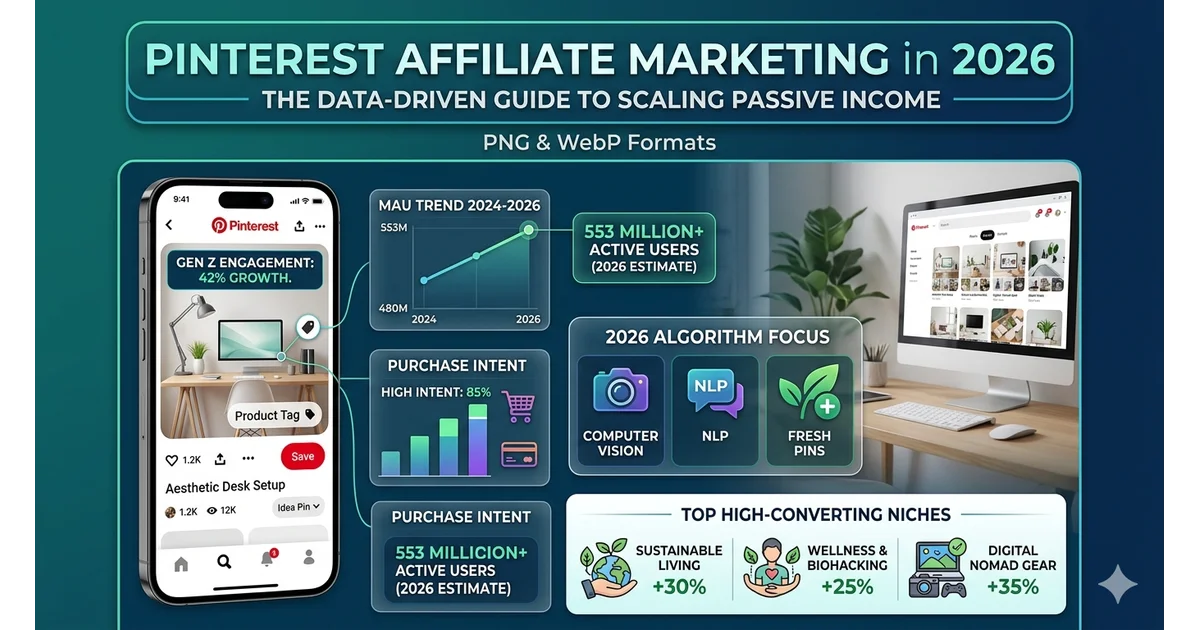
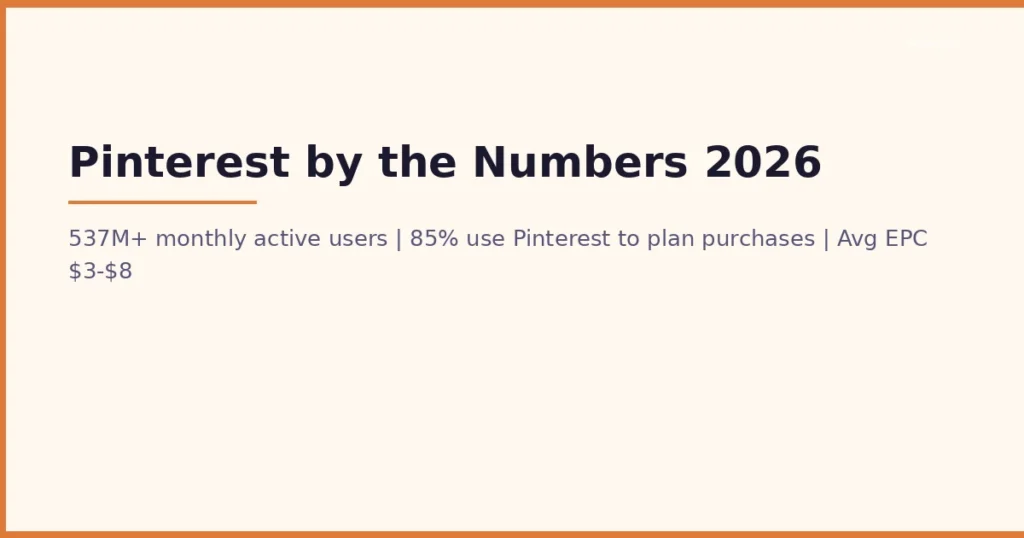
Pinterest is no longer just a digital mood board. In 2026, it has evolved into one of the most powerful and underused platforms for affiliate marketers. With over 537 million monthly active users who are actively searching for products, ideas, and solutions, Pinterest functions more like a visual search engine than a traditional social media platform. For affiliate marketers, that distinction is everything.
Unlike Instagram or TikTok, where content disappears within hours, a well-optimized Pinterest Pin can generate traffic and affiliate commissions for months or even years. This guide covers everything you need to know about Pinterest affiliate marketing in 2026, from setting up your account and choosing the right niche to creating high-converting Pins and tracking your results.
Why Pinterest Is a Goldmine for Affiliate Marketers in 2026
Pinterest has quietly become one of the highest-converting platforms for product discovery. According to Pinterest’s own business data, 85% of weekly Pinners have made a purchase based on content they found on Pinterest. That purchasing intent is unmatched by most other social platforms.
Here is a snapshot of key Pinterest statistics that make it an ideal affiliate marketing platform:
| Metric | Data (2026) |
| Monthly Active Users | 537+ million |
| % of Users Who Made a Purchase from Pinterest | 85% |
| Average Order Value (Pinterest referral) | $50–$100+ |
| Pins that drive the most traffic (Evergreen) | Remain active 3–6 months+ |
| % of Pinterest Users Who Identify as Shoppers | 97% |
| Average EPC (Earnings Per Click) | $3 – $8 |
| Top Performing Content Category | Home Decor, Fashion, Food, Finance |
Sources: Pinterest Business Insights 2026, Statista, eMarketer
How Pinterest Affiliate Marketing Works
Pinterest affiliate marketing is the process of sharing affiliate links, either directly in Pins or through a blog linked to your Pins, to earn a commission when someone clicks and makes a purchase. The mechanism is straightforward:
- You join an affiliate program (Amazon Associates, ShareASale, Impact, CJ Affiliate, etc.).
- You receive a unique trackable affiliate link for a product.
- You create an attractive Pin with that link embedded or driving traffic to a landing page.
- When a user clicks and buys, you earn a commission.
Pinterest allows direct affiliate links on Pins as of 2026, meaning you do not necessarily need a blog. However, routing traffic through a blog or landing page often increases conversions and allows you to build an email list simultaneously.
Direct Linking vs. Blog-Based Affiliate Marketing on Pinterest
| Method | Pros | Cons |
| Direct Link | Fast setup, no blog needed | Lower trust, no email list |
| Blog/Landing Page | Higher conversions, SEO synergy, email capture | Requires more setup time |
Setting Up Your Pinterest Account for Affiliate Marketing
Step 1: Create a Pinterest Business Account
A Pinterest Business Account is free and gives you access to Pinterest Analytics, Rich Pins, and the Ads Manager. If you already have a personal account, you can convert it to a business account within settings. Add a professional profile photo, keyword-rich bio, and link to your website or blog.
Step 2: Enable Rich Pins
Rich Pins automatically pull metadata from your website to make your Pins more informative and credible. For affiliate marketers using a blog as a bridge, enabling Rich Pins improves click-through rates. Apply via the Pinterest Rich Pins Validator once your site is set up.
Step 3: Optimize Your Profile with Keywords
Pinterest’s algorithm is keyword-driven. Include relevant keywords in your display name, bio, and board titles. For example, if you are in the personal finance niche, use phrases like ‘budget tips,’ ‘saving money,’ and ‘investment ideas’ throughout your profile.
Choosing the Right Niche for Pinterest Affiliate Marketing
Not every niche performs equally on Pinterest. The platform skews toward visually rich, aspirational, and solution-oriented content. Below are the top-performing niches for Pinterest affiliate marketing in 2026:
| Niche | Avg. Commission Rate | Top Affiliate Programs |
| Home Decor & Interior Design | 4% – 12% | Wayfair, Amazon, Etsy |
| Fashion & Beauty | 5% – 15% | RewardStyle (LTK), Sephora, ASOS |
| Health & Wellness | 10% – 40% | iHerb, Vitacost, ClickBank |
| Personal Finance | Up to $200 per lead | Credit Karma, Bankrate, NerdWallet |
| Food & Recipes | 3% – 8% | Amazon, Thrive Market, Sur La Table |
| DIY & Crafts | 4% – 10% | Cricut, Etsy, Amazon |
| Travel | 3% – 8% | Booking.com, Expedia, Viator |
Creating High-Converting Pinterest Pins in 2026
The design and copy of your Pin directly affects your click-through rate. Pinterest is a visual platform, so aesthetics matter enormously. Here is what works in 2026:
Pin Design Best Practices
- Use a vertical image ratio of 2:3 (1000 x 1500 pixels) for maximum feed visibility.
- Include bold, legible text overlay that communicates the value proposition immediately.
- Use high-contrast, bright colors that stand out in the Pinterest feed.
- Include a clear call-to-action (CTA) such as ‘Shop Now,’ ‘Learn More,’ or ‘Get the Recipe.’
- Use Canva, Adobe Express, or PicMonkey for professional Pin templates.
Writing SEO-Optimized Pin Descriptions
Pinterest is a search engine. Every Pin description should include your target keyword naturally, along with related long-tail keywords. Aim for 150–300 characters in your description. Avoid keyword stuffing; write naturally for a human reader while embedding 2–3 relevant keywords.
Example: ‘Looking for budget-friendly home decor ideas? These modern living room pieces from Amazon are under $50 and look incredibly high-end. Save this Pin for your next home refresh! #HomeDecor #BudgetDecor #InteriorDesign’
Pinterest SEO: Ranking Your Pins in 2026
Pinterest SEO is one of the most underutilized strategies in affiliate marketing. Pinterest’s algorithm prioritizes relevance, freshness, and engagement. Here is how to optimize for maximum reach:
Keyword Research for Pinterest
- Use Pinterest’s native search bar autocomplete to find popular keywords.
- Analyze competitor boards in your niche to identify high-performing keywords.
- Use tools like Semrush, Ahrefs, or Pinterest Trends to validate keyword volume.
- Focus on long-tail keywords (e.g., ‘best budget skincare routine 2026’) for lower competition.
Board Optimization
Each board you create should target a specific keyword cluster. Name your boards with searchable terms, not clever or vague titles. Write detailed board descriptions (200–500 characters) packed with relevant keywords. A well-organized, keyword-rich board signals relevance to Pinterest’s algorithm.
Pinning Frequency and Consistency
Pinterest rewards consistent pinning. The recommended frequency in 2026 is 5–15 Pins per day, including a mix of your own content and repins from other creators. Use scheduling tools like Tailwind or Pinterest’s native scheduler to maintain consistency without spending hours on the platform daily.
Affiliate Programs Best Suited for Pinterest in 2026
Choosing the right affiliate program is critical. The best programs for Pinterest offer visually appealing products, reliable tracking, and competitive commissions. Here is a curated comparison:
| Program | Commission | Cookie Duration | Best For |
| Amazon Associates | 1% – 10% | 24 hours | Physical products (all niches) |
| ShareASale | Varies (5%–50%) | 30–90 days | Fashion, Home, Health |
| LTK (RewardStyle) | 5% – 20% | 30 days | Fashion & Lifestyle |
| Impact Radius | Varies by brand | 30–60 days | Tech, Travel, Finance |
| ClickBank | 10% – 75% | 60 days | Digital products, Health |
| CJ Affiliate | Varies | 7–45 days | Retail, Travel, Finance |
| Etsy Affiliate | 4% | 30 days | DIY, Handmade, Gifts |
Compliance and Disclosure Rules for Pinterest Affiliates
The Federal Trade Commission (FTC) requires affiliate marketers to clearly disclose their relationships with brands. On Pinterest, this means adding ‘#ad,’ ‘#affiliate,’ or ‘#sponsored’ to any Pin that contains an affiliate link. This applies in 2026 regardless of whether you are using direct affiliate links or routing through a blog.
Pinterest’s own Community Guidelines also prohibit misleading affiliate content and spam. Always ensure your Pins represent the product accurately. Failure to comply with FTC or Pinterest rules can result in account suspension and legal liability.
Tracking and Scaling Your Pinterest Affiliate Income
Essential Metrics to Monitor
- Impressions: How many times your Pin appeared in feeds or search results.
- Outbound Clicks: The number of times users clicked your affiliate link or website link.
- Click-Through Rate (CTR): Outbound clicks divided by impressions; aim for 0.5%–2%+.
- Save Rate: How often users save your Pin to their boards (signals content quality).
- Conversions and EPC: Tracked through your affiliate dashboard.
Scaling What Works
Once you identify top-performing Pins, replicate their format across new products. Create multiple Pin variations for the same product using different images, headlines, and CTAs. A/B test descriptions and visuals. Reinvest affiliate earnings into Pinterest Ads to amplify proven content at scale.
People Also Ask: Pinterest Affiliate Marketing 2026
Q: Can I put affiliate links directly on Pinterest?
A: Yes. Pinterest allows direct affiliate links in Pins as of 2026. However, you must disclose the affiliate relationship with tags like #affiliate or #ad in the Pin description.
Q: How much can I realistically earn from Pinterest affiliate marketing?
A: Earnings vary widely by niche and effort. Beginners typically earn $100–$500/month within 3–6 months. Experienced marketers with optimized boards can earn $3,000–$10,000+ per month.
Q: Do I need a blog for Pinterest affiliate marketing?
A: No, a blog is not mandatory. You can link directly to affiliate products. However, using a blog as a bridge page significantly increases trust, conversions, and enables email list building
Q: Is Pinterest good for affiliate marketing in 2026?
A: Absolutely. Pinterest’s high purchase intent, long Pin lifespan, and visual search engine model make it one of the most effective platforms for passive affiliate income in 2026.
Q: What is the best niche for Pinterest affiliate marketing?
A: Top niches include home decor, fashion, personal finance, health & wellness, food, and DIY crafts. These combine high visual appeal with strong affiliate program availability.
Q: How many Pins should I post per day?
A: Pinterest experts in 2026 recommend 5–15 Pins per day for consistent growth. Use Tailwind or Pinterest’s native scheduler to automate posting.
Pinterest Affiliate Marketing 2026: The Complete Guide to Earning Passive Income
Pinterest affiliate marketing in 2026 presents a genuine, scalable income opportunity for anyone willing to invest time in learning the platform’s search dynamics. With over half a billion monthly active users who are actively primed to buy, a single viral Pin can generate commissions for years. The keys to success are consistent pinning, keyword-rich optimization, compelling visuals, and partnering with affiliate programs that align with your niche.
Whether you are starting from scratch or looking to scale an existing affiliate strategy, Pinterest deserves a prominent place in your 2026 marketing playbook. Start with one niche, master it, and expand from there. The platform rewards patience, consistency, and creativity.
Authoritative References
1. Pinterest Business Insights & Newsroom (2026) — business.pinterest.com
2. Federal Trade Commission — FTC Endorsement Guides: ftc.gov/endorsements
3. eMarketer — Social Commerce & Pinterest Shopping Report 2025–2026
4. Statista — Pinterest Monthly Active Users Worldwide 2024–2026
5. ShareASale / Awin — Affiliate Marketing Benchmarks Report 2026
6. Tailwind App — Pinterest Marketing Best Practices Guide 2026 (tailwindapp.com)
7. Neil Patel Digital — Pinterest SEO and Affiliate Strategy (neilpatel.com)
8. HubSpot — The Ultimate Guide to Affiliate Marketing 2026 (hubspot.com)