How to Build AI Influencer Marketing in 2026 | Complete Strategy Guide
Learn how to build a successful AI influencer marketing strategy in 2026. Discover tools, stats, step-by-step tactics, and expert insights to grow your brand with AI-powered influencers — from virtual avatars to AI-driven campaign management. Digital Marketing · AI Strategy
How to Build AI Influencer Marketing in 2026: A Complete Step-by-Step Guide
Influencer marketing has entered a bold new era. In 2026, brands are no longer limited to human creators — they are building, deploying, and scaling AI influencers: digital personas powered by artificial intelligence that create content, engage audiences, and drive measurable ROI around the clock. Whether you are a startup, a mid-sized e-commerce brand, or a global enterprise, understanding how to build an AI influencer marketing strategy is no longer optional — it is a competitive necessity.
AI Influencer Marketing: Key Stats & Market Data (2026)
Before building a strategy, it is important to understand the scale of the opportunity. The numbers speak clearly:
| Metric | Human Influencer | AI Influencer |
|---|---|---|
| Monthly Content Output | 8–15 posts | 30–60 posts |
| Average Cost per Post | $500–$50,000+ | $50–$5,000 |
| Brand Control | Limited | Full control |
| Availability | Business hours | 24/7/365 |
| Scandal Risk | High | Very Low |
| Avg. Engagement Rate (2026) | 3.2% | 4.8% |
Sources: Influencer Marketing Hub 2026 Benchmark Report; Statista Digital Advertising Outlook 2026; Business Insider Intelligence.
What Is AI Influencer Marketing?
AI influencer marketing refers to the use of artificially created digital personas — often photorealistic or stylized virtual characters — to promote products, services, or brand narratives on social media platforms. These AI personas can post photos, shoot videos, respond to comments, host live sessions, and even collaborate with human influencers.
Examples like Lil Miquela (3M+ Instagram followers), Imma (Japan’s most followed virtual influencer), and newer AI avatars built on platforms like Synthesia and HeyGen have proven that audiences engage deeply with well-crafted digital personas — sometimes more than with human creators.
Key Insight: AI influencers are not replacing human creators — they are filling gaps in content consistency, cost efficiency, and brand control that human creators cannot always meet.
How to Build Your AI Influencer Marketing Strategy: 7 Steps
1. Define Your Goals and Target Audience
Every successful campaign starts with clarity. Ask yourself: Are you trying to build brand awareness, drive product sales, grow social followers, or improve content volume? Your goal determines the type of AI influencer you create or partner with. A luxury fashion brand needs a hyper-realistic, aspirational digital persona. A gaming company may thrive with an animated, personality-driven avatar. Map your goals to your audience’s demographics, platforms, and content preferences before you design anything.
2. Choose Your AI Influencer Model: Build vs. Partner
You have two core paths. The first is building your own AI influencer — a branded digital persona owned entirely by your company. This requires investment in visual design, voice synthesis, content workflows, and persona development. The second is partnering with existing AI influencers or agencies that manage virtual personas. Building gives you full control and long-term asset value; partnering gives you speed and an existing audience.
3. Select the Right AI Tools and Platforms
The 2026 ecosystem offers purpose-built tools for every stage of AI influencer creation. Here is a practical overview of leading platforms:
| Tool | Use Case | Pricing (Est.) |
|---|---|---|
| HeyGen | AI video avatars & talking head videos | From $24/mo |
| Synthesia | Photorealistic AI video creation | From $29/mo |
| Midjourney v7 | Image-based persona creation | From $10/mo |
| ElevenLabs | AI voice cloning for persona | From $5/mo |
| Runway ML | AI video generation & editing | From $15/mo |
| Character.AI (API) | Conversational AI for engagement | Custom pricing |
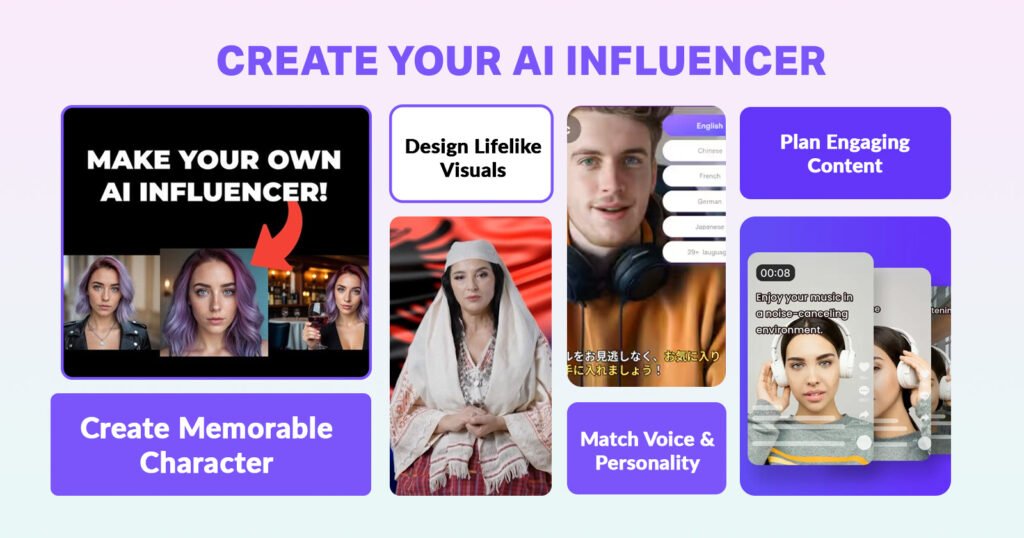
4. Design Your AI Influencer’s Persona and Identity
A compelling AI influencer needs more than a face — it needs a backstory, personality traits, values, communication style, and aesthetic. Define your persona as thoroughly as you would a fictional character: What is their name? Where are they from? What do they care about? , brands do they love? and What problems do they help their audience solve? Audiences in 2026 are highly discerning. Generic AI avatars fail. Authentic, well-crafted personas with consistent storytelling succeed. Document your persona’s brand voice guide and style bible before generating a single piece of content.
5. Build a Content Strategy and Production Pipeline
AI influencers enable high-volume content production — but quality must remain the priority. Structure your pipeline around three content pillars: education (tips, how-tos), entertainment (storytelling, trends), and promotion (product features, offers). Use a content calendar with a ratio of 70% value content to 30% promotional. Automate where possible using scheduling tools like Buffer or Later, and use AI image/video generation tools to produce batches of content efficiently. Each post should include platform-optimized captions, relevant hashtags, and a clear call to action.
6. Launch, Promote, and Build an Audience
Launching your AI influencer is not a “set and forget” exercise. Use paid social ads on Instagram, TikTok, and YouTube Shorts to seed initial visibility. Collaborate with human micro-influencers (10K–100K followers) for cross-promotion — audiences trust recommendations from creators they already follow. Participate in trending content formats, engage with comments using AI-powered responses, and maintain a consistent posting frequency (minimum 4–5 posts per week on primary platforms).
7. Measure Performance and Optimize Continuously
Track the KPIs that align with your original goals. For awareness campaigns, monitor reach, impressions, and follower growth. For conversion campaigns, focus on click-through rate (CTR), conversion rate, and cost per acquisition (CPA). Use platform analytics combined with tools like Sprout Social, Brandwatch, or Iconosquare for deeper insights. Review performance monthly and A/B test content formats, posting times, and persona messaging to continuously improve results.
Ethical and Legal Considerations in AI Influencer Marketing
Transparency and Disclosure
Regulatory bodies including the FTC (USA), ASA (UK), and the EU’s Digital Services Act now require brands to clearly disclose when content is created or delivered by an AI persona. Failure to disclose AI-generated influencer content can result in significant fines and reputational damage. Always label AI influencer content with clear disclosures such as “AI-generated” or “Virtual Influencer.”
Data Privacy and Audience Protection
If your AI influencer collects audience data through chatbots or interactive features, ensure full compliance with GDPR, CCPA, and relevant local regulations. Never use AI personas to target vulnerable groups with misleading health, financial, or relationship content. Building ethical guardrails into your AI influencer from day one protects your brand and builds long-term audience trust.
Best Platforms for AI Influencer Marketing in 2026
| Platform | Best Content Format | AI Influencer Fit |
|---|---|---|
| TikTok | Short video (15–60 sec) | ⭐⭐⭐⭐⭐ Excellent |
| Reels, carousels, stories | ⭐⭐⭐⭐⭐ Excellent | |
| YouTube Shorts | Vertical short video | ⭐⭐⭐⭐ Very Good |
| Thought leadership posts | ⭐⭐⭐ Good (B2B) | |
| X (Twitter) | Text + image threads | ⭐⭐⭐ Moderate |
| Visual product pins | ⭐⭐⭐ Good (e-commerce) |
People Also Ask(FAQ’s)
What is an AI influencer?
An AI influencer is a digitally created persona — either a photorealistic virtual human or an animated character — that is powered by artificial intelligence to create content, engage with audiences, and promote brands on social media platforms without being a real human being.
How much does it cost to create an AI influencer?
Costs vary widely. A basic AI influencer built using existing tools like Midjourney and HeyGen can be launched for as little as $100–$500/month. A fully custom, photorealistic AI persona with branded video production, voice synthesis, and audience management can cost $5,000–$50,000+ in initial development.
Are AI influencers effective for marketing?
Yes. Studies show AI influencers achieve an average engagement rate of 4.8% — higher than the human influencer average of 3.2% (Influencer Marketing Hub, 2026). They offer consistent brand messaging, 24/7 content production, and zero risk of personal scandal.
Do I need to disclose that my influencer is AI?
Yes. In most markets including the US, UK, and EU, brands are legally required to disclose AI-generated or AI-operated influencer content to consumers. Non-disclosure can result in regulatory fines and significant brand trust damage.
What industries benefit most from AI influencer marketing?
Fashion and beauty, gaming, technology, food and beverage, fitness, and e-commerce are the top industries leveraging AI influencers in 2026. However, almost any consumer-facing brand can benefit from the cost-efficiency and scale that AI influencers provide.
Can AI influencers replace human influencers?
Not entirely. Human influencers bring authentic relatability, lived experience, and emotional depth that AI personas currently cannot fully replicate. The most effective strategies in 2026 combine both — using AI influencers for volume and consistency while partnering with human creators for authenticity and community trust.
How to Build AI Influencer Marketing in 2026: Quick Action Step:
This week, audit your current influencer marketing spend, identify one content gap (frequency, cost, or brand control), and explore how an AI influencer could solve it. Start small — even a single AI-generated content series can reveal enormous potential.
Authoritative References
- Influencer Marketing Hub. (2026). Influencer Marketing Benchmark Report 2026. influencermarketinghub.com
- Business Insider Intelligence. (2025). Virtual Influencer Market Report. businessinsider.com
- Federal Trade Commission. (2024). Disclosures 101 for Social Media Influencers. ftc.gov
- Gartner. (2025). Top Marketing Technology Trends 2025–2026. gartner.com
- HeyGen AI. (2026). AI Avatar Creation Platform Documentation. heygen.com
- European Commission. (2024). Digital Services Act: Obligations for Content Platforms. digital-strategy.ec.europa.eu