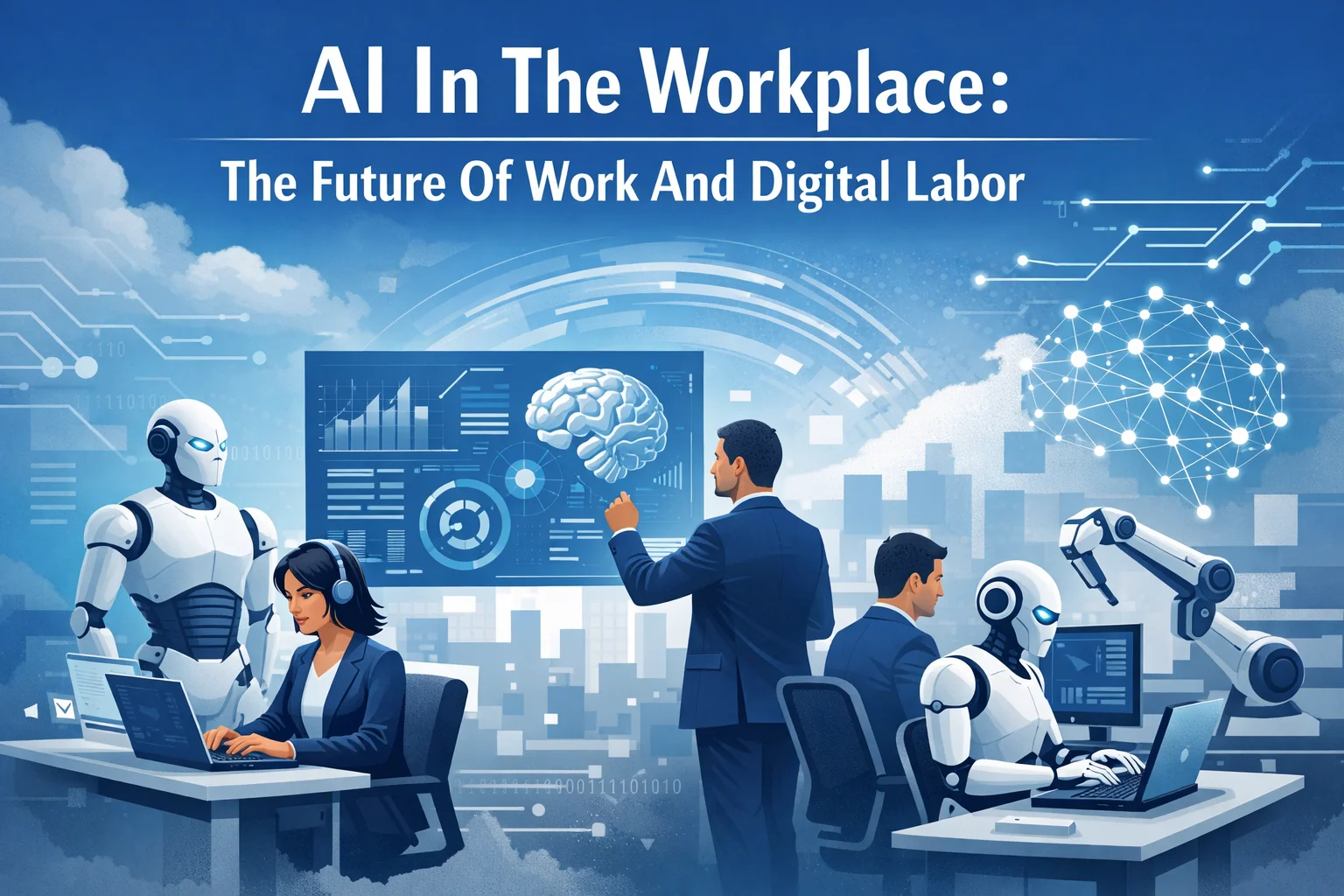
AI in the Workplace: The Future of Work and Digital Labor
Artificial Intelligence (AI) is no longer a distant concept—it is actively reshaping how organizations operate, how employees work, and how value is created. From automating repetitive tasks to enabling data-driven decision-making, AI in the workplace is redefining productivity, collaboration, and the very nature of jobs. As businesses across industries adopt AI technologies, understanding the future of work and digital labor has become essential for leaders, employees, and entrepreneurs alike.
Understanding AI in the Workplace
AI in the workplace refers to the use of intelligent systems, algorithms, and machine learning tools to perform tasks that traditionally required human intelligence. These tasks include data analysis, customer support, forecasting, content generation, and even decision-making.
What Is Digital Labor?
Digital labor is the work performed by software robots, AI systems, and automated tools that replicate or enhance human tasks. Unlike traditional automation, digital labor can learn, adapt, and improve over time, making it more flexible and powerful.
Examples of digital labor include:
- AI chatbots handling customer queries
- Robotic Process Automation (RPA) managing invoices and payroll
- AI tools analyzing large datasets for insights
- Virtual assistants scheduling meetings and managing workflows
How AI Is Transforming the Future of Work
AI is not just changing what work is done—it is changing how work is done. The future of work is increasingly hybrid, digital, and AI-assisted.
Automation of Repetitive Tasks
One of the most immediate impacts of AI is automation. Routine, repetitive, and time-consuming tasks are being handled by AI systems, allowing employees to focus on higher-value work.
Common automated tasks include:
- Data entry and processing
- Email sorting and responses
- Inventory management
- Report generation
This shift improves efficiency while reducing human error.
Augmenting Human Capabilities
Rather than replacing humans entirely, AI often works alongside employees to enhance their capabilities. This concept, known as augmented intelligence, enables workers to make better decisions faster.
For example:
- AI assists marketers with customer behavior analysis
- HR teams use AI to screen resumes more accurately
- Financial analysts rely on AI for predictive forecasting
AI becomes a partner, not a replacement.
AI and Job Roles: Creation vs. Displacement
A major concern surrounding AI in the workplace is job displacement. While it is true that some roles may become obsolete, AI is also creating new job opportunities.
Jobs at Risk of Automation
Roles that involve predictable, repetitive tasks are more likely to be automated, such as:
- Basic data entry clerks
- Assembly line workers
- Telemarketing roles
- Simple administrative positions
However, automation does not happen overnight, and many roles evolve rather than disappear.
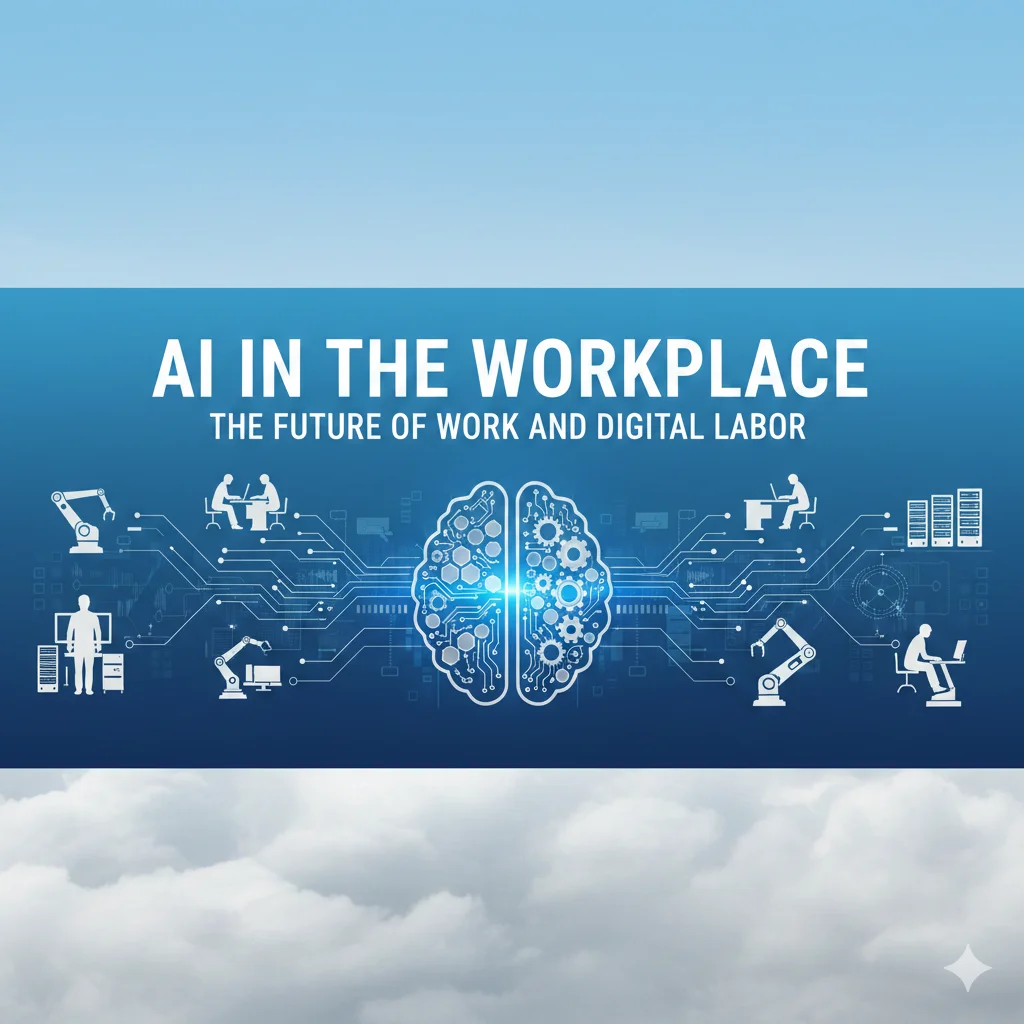
AI in the Workplace: The Future of Work and Digital Labor : New Jobs Created by AI
AI adoption is driving demand for new skills and roles, including:
- AI and machine learning specialists
- Data analysts and data scientists
- AI ethicists and compliance officers
- Automation consultants
- Prompt engineers and AI trainers
The future workforce will require a mix of technical, creative, and strategic skills.
The Rise of AI-Driven Digital Workplaces
AI is also reshaping workplace environments, making them more connected, flexible, and data-driven.
Remote and Hybrid Work Enablement
AI tools support remote and hybrid work by:
- Automating task tracking and performance monitoring
- Enhancing virtual collaboration tools
- Providing real-time productivity insights
- Managing distributed teams efficiently
This enables organizations to operate globally without sacrificing efficiency.
Smarter Decision-Making with AI
AI analyzes massive amounts of data to uncover patterns humans might miss. Leaders can use AI-powered insights to:
- Optimize workforce planning
- Improve customer experience
- Reduce operational costs
- Predict market trends
Data-driven decisions lead to more resilient and agile organizations.
Ethical Considerations and Challenges of AI in the Workplace
Despite its benefits, AI in the workplace raises important ethical and practical concerns that organizations must address.
Bias and Fairness in AI Systems
AI systems learn from data, and biased data can lead to biased outcomes. This is particularly critical in areas like hiring, promotions, and performance evaluation.
To mitigate bias, companies must:
- Use diverse and representative datasets
- Regularly audit AI systems
- Maintain human oversight in decision-making
Employee Privacy and Surveillance
AI-powered monitoring tools can track productivity, communication, and behavior. While useful, excessive surveillance can harm trust and morale.
Organizations should:
- Be transparent about data collection
- Respect employee privacy
- Use AI responsibly and ethically
Reskilling and Up skilling for an AI-Driven Future
The future of work depends heavily on how well organizations prepare their workforce for AI integration.
Importance of Continuous Learning
As AI evolves, skills can become outdated quickly. Employees must adopt a mindset of lifelong learning to remain relevant.
Key skills for the AI era include:
- Digital literacy
- Data interpretation
- Critical thinking
- Creativity and problem-solving
- Emotional intelligence
Role of Employers in Workforce Transformation
Employers play a critical role by:
- Offering AI training programs
- Encouraging cross-functional learning
- Supporting career transitions
- Investing in employee development
Organizations that prioritize reskilling will gain a competitive advantage.
Artificial intelligence in the Workplace across Industries
AI adoption varies across industries, but its impact is widespread.
AI in Healthcare and Finance
In healthcare, AI supports diagnostics, patient care, and administrative efficiency. In finance, it enhances fraud detection, risk assessment, and customer service.
AI in Manufacturing and Retail
Manufacturing uses AI for predictive maintenance and quality control, while retail leverages AI for personalized shopping experiences and demand forecasting.
Across sectors, AI improves accuracy, speed, and scalability.
The Future of Digital Labor: What to Expect
Looking ahead, digital labor will become a standard component of the workforce.
Human-AI Collaboration Will Be the Norm
The most successful organizations will combine human creativity with AI efficiency. Jobs will increasingly involve managing, guiding, and collaborating with AI systems.
Flexible and Skill-Based Work Models
Traditional job titles may give way to skill-based roles. Employees will work on projects rather than fixed positions, supported by AI tools that match skills to tasks.
AI in the Workplace: The Future of Work and Digital Labor: People Also Ask (FAQs)
Will AI replace human jobs in the workplace?
AI will replace some tasks, not all jobs. While certain roles may decline, AI will also create new jobs and transform existing ones. Human skills like creativity, empathy, and strategic thinking will remain essential.
How does AI improve workplace productivity?
AI improves productivity by automating repetitive tasks, reducing errors, providing real-time insights, and enabling faster decision-making, allowing employees to focus on high-value work.
What skills are needed for the future of work with AI?
Key skills include digital literacy, data analysis, critical thinking, creativity, adaptability, and emotional intelligence. Technical AI knowledge is valuable but not required for all roles.
Is AI in the workplace ethical?
AI can be ethical if implemented responsibly. Transparency, fairness, data privacy, and human oversight are essential to ensure ethical AI use in the workplace.
How can businesses prepare for AI-driven digital labor?
Businesses should invest in AI tools, reskill employees, establish ethical guidelines, and foster a culture of continuous learning to successfully adapt to digital labor.
Embracing AI for a Smarter Future of Work
AI in the work area is not a temporary trend—it is a fundamental shift in how work is performed and valued. The future of work and digital labor will be defined by collaboration between humans and intelligent systems. Organizations that embrace AI thoughtfully, invest in their workforce, and prioritize ethical implementation will thrive in this new era.