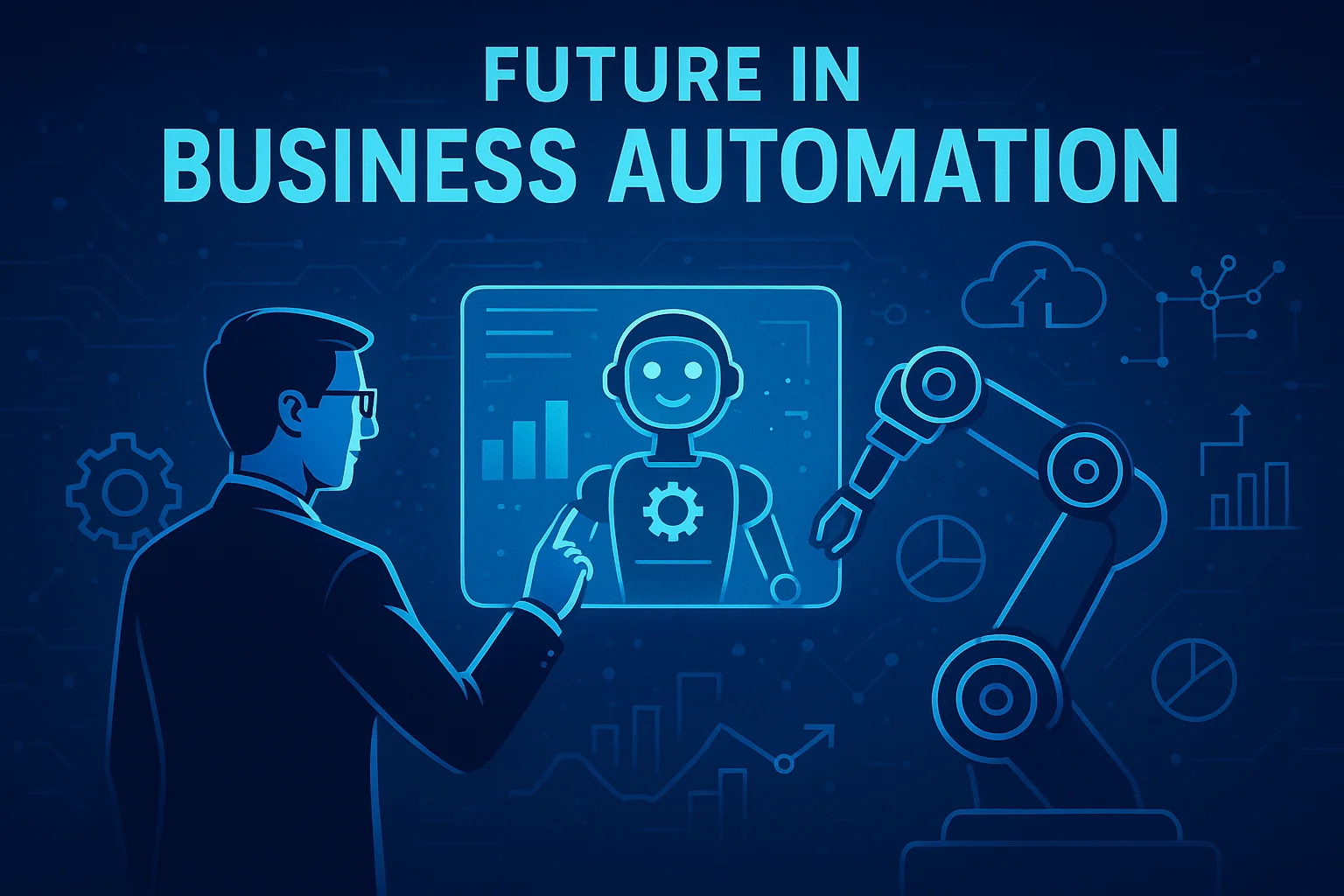
Future in Business Automation: What the Next Decade Means for Companies Worldwide
In today’s rapidly evolving digital world, business automation has shifted from being optional to absolutely essential. Every year, new technologies reshape how organizations operate, communicate, and grow. From artificial intelligence (AI) and machine learning (ML) to robotic process automation (RPA) and autonomous systems, automation is transforming the global business landscape at an unprecedented pace.
The future of business automation promises to bring smarter workflows, greater operational efficiency, and enhanced customer experiences—all while reducing costs and enabling teams to focus on high-value work. As we move deeper into the next decade, companies that embrace automation early will lead the market, while others risk falling behind.
This detailed exploration of the future in business automation will help you understand what to expect, which trends matter most, and how businesses can prepare for a fully automated future.
Future in Business Automation
1. Understanding the New Era of Business Automation
Business automation originally began with simple tools: calculators, spreadsheets, and basic software. But today, automation is powered by intelligent systems capable of learning, predicting, and improving over time. The modern wave of automation includes:
- Artificial Intelligence (AI)
- Machine Learning (ML)
- Robotic Process Automation (RPA)
- Business Process Automation (BPA)
- Natural Language Processing (NLP)
- Predictive Analytics
- Autonomous Robotics
- Cloud and Edge Computing
These innovations allow businesses to automate not just repetitive tasks, but also decision-making processes, customer interactions, and large-scale data analysis. As industries become more competitive and globalized, companies must embrace automation to maintain speed, consistency, and adaptability.
2. Why Automation Will Dominate the Future of Business
1. Increased Efficiency and Productivity
Automation reduces the time spent on manual tasks. For example, AI-powered systems can analyze thousands of data sets in seconds, while RPA bots can complete repetitive tasks 24/7 without breaks. This boost in efficiency enables teams to focus on strategic and creative aspects of business.
2. Reduced Operational Costs
From lowering labor costs to minimizing errors, automation significantly cuts expenses. Automated workflows reduce the need for large administrative teams, allowing companies to redirect funds toward growth, research, or product development.
3. Improved Customer Experience
Automation is revolutionizing customer support through chatbots, AI recommendation engines, and personalized marketing. Modern businesses use automation to respond faster, offer tailored experiences, and maintain consistent service quality across platforms.
4. Enhanced Decision-Making
AI and analytics tools can predict trends, detect problems, and offer insights. Businesses can now make data-driven decisions in real time, improving accuracy and strategic planning.
5. Scalability and Flexibility
Automation systems can grow with a company. As demand increases, automated processes can expand without the need for massive hiring or re-training efforts.
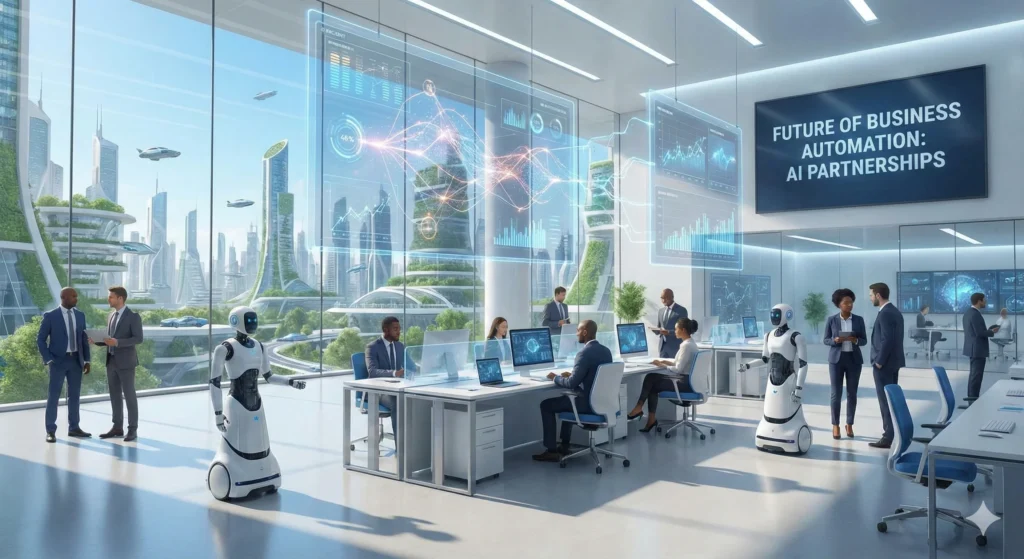
3. Top Automation Trends Shaping the Future
1. AI-Driven Decision Automation
Traditional business decisions require human judgment, but AI is quickly changing that. Advanced systems use machine learning algorithms to analyze data and make decisions independently—whether it’s approving credit applications, optimizing supply chains, or predicting market shifts.
In the future, AI-driven decision automation will become the backbone of business operations.
2. Hyperautomation
Hyperautomation refers to the combination of RPA, AI, analytics, and advanced software to automate as many business processes as possible. It goes beyond simple task automation and focuses on creating completely integrated, intelligent, and self-driven workflows.
Gartner already calls hyperautomation a “must-have” strategy for future-ready companies.
3. Autonomous Robots and Workforce Augmentation
Robots are no longer limited to manufacturing lines. Today’s autonomous robots assist in warehouses, retail stores, healthcare facilities, and even restaurants. As technology improves, robots will work side-by-side with humans, improving efficiency and safety.
This doesn’t replace human workers—it augments them by handling the heavy, repetitive, or dangerous tasks.
4. Conversational AI and Digital Assistants
Voice assistants and chatbots are growing smarter by the day. With NLP advancements, conversational AI can interpret complex queries, emotions, and context. In the coming years, digital assistants will become key to customer service, HR operations, and even internal workflow management.
5. Personalized Marketing Automation
AI analyzes customer behavior and purchasing patterns to create hyper-personalized marketing campaigns. Automated systems will soon deliver:
- Customized product recommendations
- Tailored email sequences
- Real-time engagement messages
- Smart retargeting strategies
Marketing automation will be a core tool for businesses aiming to boost conversions and customer loyalty.
6. Smart Supply Chain Automation
Automation is transforming global supply chains. From predictive inventory management to AI-powered demand forecasting, smart supply chains reduce delays, minimize waste, and improve product availability. Autonomous delivery drones and self-driving vehicles will further streamline logistics.
7. Cloud and Edge Automation
As businesses store more data, cloud computing combined with edge technology enables automation closer to data sources. This improves processing speed, reduces latency, and ensures uninterrupted operations—even without internet connectivity.
4. The Impact of Automation on the Workforce
A common concern surrounding automation is the fear of job loss. While automation will replace some repetitive roles, it will also create many new opportunities.
Jobs at Risk
Tasks that involve routine, manual, or predictable activities are most likely to be automated, such as:
- Data entry
- Basic bookkeeping
- Manual inventory checking
- Customer support call handling
- Report generation
Jobs That Will Grow
Automation will increase demand for roles requiring creativity, strategic thinking, emotional intelligence, and technical skills. These include:
- AI and automation specialists
- Data analysts
- Cybersecurity experts
- Digital transformation consultants
- Robotics maintenance engineers
- Customer experience managers
The future workforce will focus more on innovation than administration.
5. How Businesses Can Prepare for an Automated Future
1. Adopt a Digital-First Mindset
Organizations that resist digital transformation will struggle. Companies must embrace technology and adapt quickly to remain competitive.
2. Invest in the Right Tools Early
Automation software, AI platforms, cloud services, and analytics tools should be integrated gradually. Early adoption ensures long-term success and smoother transitions.
3. Train and Upskill Employees
Automation succeeds only when employees understand how to use it. Investing in training programs helps staff transition into modern, tech-driven roles.
4. Start Small, Then Scale
Businesses should begin with small processes—like email automation or inventory tracking—and expand over time. This limits risk and ensures successful implementation.
5. Prioritize Data Security
Automation relies heavily on data, making cybersecurity essential. Companies must invest in secure networks, encryption, and compliance systems to protect sensitive information.
6. The Long-Term Future of Business Automation
The next decade will bring significant advancements in automation technology. Here’s what businesses can expect:
1. Fully Automated Business Ecosystems
End-to-end automation will become common. A single AI system may handle marketing, customer service, HR, supply chain, and financial operations seamlessly.
2. Predictive and Self-Healing Systems
Future systems will not only detect issues but also fix them automatically. This reduces downtime and improves operational efficiency.
3. AI-Powered Creativity
From designing products to writing content and developing business strategies, AI will increasingly assist in creative and strategic tasks. Human-AI collaboration will redefine innovation.
4. Expansion of No-Code/Low-Code Automation Tools
Non-technical employees will be able to build automated workflows using simple drag-and-drop tools. This democratization of automation will empower all departments.
5. Ethical Automation and Regulation
Governments and companies will focus more on responsible automation, ensuring ethical AI use, transparency, and fairness.
Automation Is the Future — and the Future Is Now
The future of business automation is bright, transformative, and filled with opportunities for companies willing to adapt. From smarter AI to predictive systems and autonomous robots, automation will revolutionize every industry.
Companies that invest in automation today will enjoy:
- Lower operational costs
- Higher productivity
- Better customer experiences
- Stronger competitiveness
- More innovative teams
Automation isn’t just a trend—it’s the foundation of the modern business era. The future belongs to organizations ready to embrace intelligent systems and lead with digital innovation.