2026 New Year: Business Goals and Roadmap for Sustainable Growth
The start of 2026 brings fresh opportunities, evolving technologies, and changing market dynamics. For entrepreneurs, startups, and established businesses alike, the New Year is the perfect time to redefine business goals and create a clear roadmap for success. Without a structured plan, even the most innovative ideas can lose direction.
Why 2026 Is a Critical Year for Business Planning
The global business environment in 2026 is shaped by AI adoption, digital transformation, sustainability demands, and customer-centric strategies. Companies that plan ahead will outperform those reacting late.
Key reasons why goal setting in 2026 matters:
- Rapid technological advancements
- Increased competition in digital markets
- Higher customer expectations
- Economic uncertainty requiring agile planning
A strong roadmap helps businesses stay focused, adaptable, and resilient.
2026: Business Goals and Roadmap for Sustainable Growth: Understanding Business Goals for 2026
What Are Business Goals?
Business goals are specific outcomes a company aims to achieve within a defined time frame. In 2026, goals should balance growth, efficiency, innovation, and sustainability.
Types of Business Goals to Set in 2026
1. Financial Goals
- Increase revenue or profit margins
- Reduce operational costs
- Improve cash flow management
2. Growth and Expansion Goals
- Enter new markets
- Launch new products or services
- Scale operations digitally
3. Operational Efficiency Goals
- Automate workflows using AI tools
- Improve supply chain efficiency
- Reduce manual processes
4. Customer Experience Goals
- Improve customer retention
- Personalize customer journeys
- Strengthen brand trust
5. Team and Culture Goals
- Upskill employees
- Improve workplace flexibility
- Build leadership pipelines
How to Set SMART Business Goals for 2026
What Does SMART Mean?
To be effective, business goals should follow the SMART framework:
- Specific – Clearly defined objectives
- Measurable – Track progress with KPIs
- Achievable – Realistic based on resources
- Relevant – Aligned with business vision
- Time-bound – Clear deadlines
Example of a SMART Goal
Instead of saying “grow sales”, define:
“Increase online sales by 20% by Q4 2026 through digital marketing and conversion optimization.”
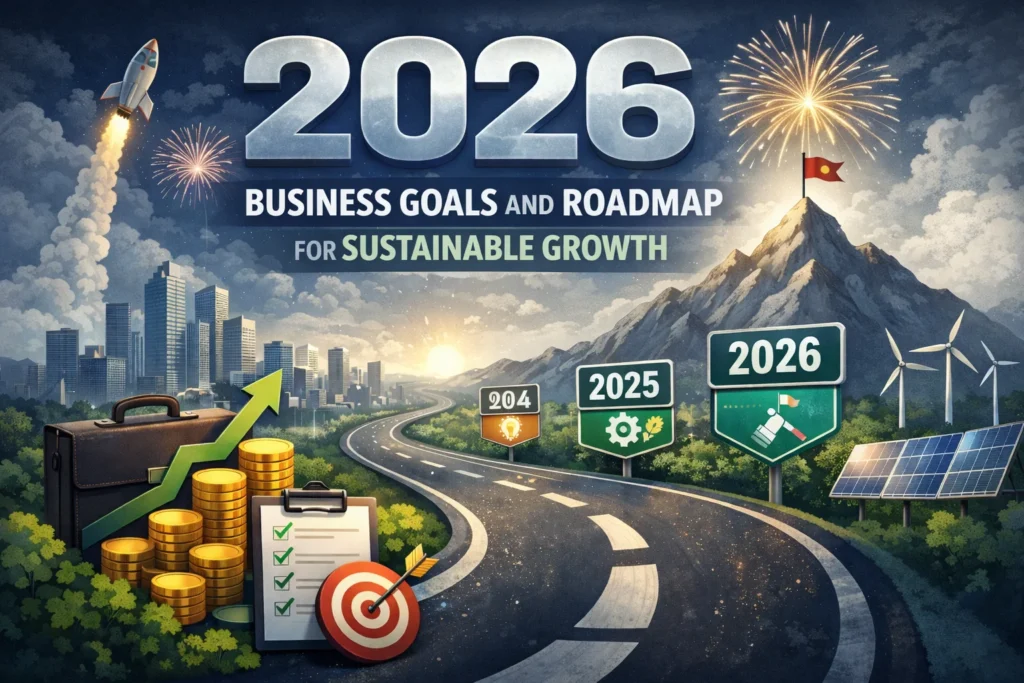
Building a Business Roadmap for 2026
A business roadmap is a step-by-step plan that outlines how goals will be achieved over time.
Key Components of a 2026 Business Roadmap
Vision and Mission Alignment
Ensure every goal supports your long-term vision and brand purpose.
Strategic Priorities
Identify 3–5 core priorities such as:
- Digital transformation
- Market expansion
- Customer retention
- Cost optimization
Timeline and Milestones
Break the year into:
- Q1: Planning and foundation
- Q2: Execution and testing
- Q3: Optimization and scaling
- Q4: Review and future planning
Resource Allocation
Assign:
- Budget
- Team responsibilities
- Technology tools
2026 Business Roadmap by Quarter
Q1 2026: Planning and Strategy
- Conduct market and competitor analysis
- Set annual KPIs
- Finalize budgets and tools
- Align teams with goals
Focus: Clarity and alignment
Q2 2026: Execution and Implementation
- Launch new initiatives
- Implement automation or AI tools
- Start marketing campaigns
- Improve customer engagement strategies
Focus: Action and consistency
Q3 2026: Optimization and Growth
- Analyze performance data
- Optimize underperforming areas
- Scale successful strategies
- Explore partnerships or collaborations
Focus: Efficiency and scalability
Q4 2026: Review and Future Planning
- Measure goal achievement
- Document lessons learned
- Plan goals for 2027
- Strengthen customer relationships
Focus: Reflection and sustainability
Role of Technology in Achieving 2026 Business Goals
AI and Automation
AI tools help businesses:
- Automate repetitive tasks
- Improve decision-making
- Enhance customer support
Data-Driven Decision Making
Using analytics allows businesses to:
- Track performance in real time
- Predict market trends
- Reduce risks
Digital Marketing and Online Presence
In 2026, strong SEO, content marketing, and social media strategies are essential for visibility and growth.
Common Challenges in Business Planning for 2026
Unclear Priorities
Too many goals can dilute focus. Prioritize what matters most.
Resistance to Change
Adopting new technology or processes may face internal resistance. Clear communication and training are key.
Poor Execution
A roadmap without execution leads nowhere. Regular reviews ensure accountability.
Tips to Stay on Track Throughout 2026
- Review goals monthly
- Track KPIs consistently
- Encourage team feedback
- Stay flexible with market changes
- Celebrate small wins to maintain momentum
Measuring Success: KPIs for 2026 Business Goals
Key metrics to track include:
- Revenue growth
- Customer acquisition cost
- Customer retention rate
- Employee productivity
- Digital engagement metrics
Regular measurement ensures goals remain relevant and achievable.
People Also Ask (FAQs)
What are the most important business goals for 2026?
The most important goals include revenue growth, digital transformation, customer experience improvement, and operational efficiency.
How do I create a business roadmap for the New Year?
Start by defining clear goals, break them into quarterly milestones, allocate resources, and track progress using KPIs.
Why is a business roadmap important?
A roadmap provides direction, improves decision-making, aligns teams, and helps businesses adapt to change.
How often should business goals be reviewed?
Business goals should be reviewed monthly or quarterly to ensure alignment with market conditions and performance.
What role does technology play in business growth in 2026?
Technology enables automation, data-driven decisions, improved customer experiences, and scalable growth strategies.
Start 2026 with Purpose and Direction
The 2026 New Year is more than just a fresh calendar—it’s an opportunity to reset priorities, refine strategies, and build a clear business roadmap. By setting SMART goals, leveraging technology, and staying adaptable, businesses can turn uncertainty into opportunity.
Success in 2026 will belong to those who plan with intention, execute with discipline, and adapt with confidence. Start today, and make 2026 your most strategic and profitable year.