The Cost of Enforcing AI in Healthcare: Treatment and Care with Algorithms
Artificial Intelligence (AI) is transforming rapidly the healthcare landscape. From improving diagnostic accuracy to enhancing patient care, AI algorithms now play a crucial role in modern medicine. However, the cost of Enforcing AI in healthcare—especially for treatment and care—remains a significant consideration for providers, policymakers, and patients alike. This blog explores those costs in depth, breaking down what drives them, the challenges involved, and the long-term financial implications.
What is AI in Healthcare?
AI in healthcare refers to the use of machine learning algorithms, natural language processing, and other intelligent systems to analyze complex medical data and support clinical decision-making. At its core, AI uses data patterns to provide insights that improve diagnostic accuracy, treatment plans, and operational efficiency.
Examples include:
- AI-assisted imaging for early detection of diseases
- Predictive models to reduce hospital readmissions
- Virtual health assistants and chatbots for patient support
With growing investments and technological advancements, AI is reshaping treatment and care delivery worldwide. But this transformation comes with financial costs that healthcare organizations must carefully evaluate.
Why Cost Matters: The Economics of AI in Healthcare
Implementing AI in healthcare is not just a technological improvement; it represents a financial investment with both upfront costs and long-term returns. For many providers, these economic factors influence decisions around adoption, scalability, and sustainability.
The Dual Nature of Costs
Healthcare AI costs fall into two broad categories:
- Initial investment costs
- Operational and ongoing costs
These costs vary significantly by healthcare system size, technology complexity, and strategic goals.
Initial Investment Costs of AI in Healthcare
Before AI can be integrated into treatment and care, healthcare organizations face several upfront costs.
1. Infrastructure and Technology
AI systems require robust computational resources and secure data environments, including:
- High-performance servers and GPUs
- Cloud platforms for scalable data processing
- Secure networks to protect sensitive health records
Infrastructure costs can range from tens of thousands to millions depending on the scale of implementation. Smaller clinics typically rely on cloud-based solutions to lower initial expenditure, while large hospitals may invest in on-site servers.
2. Data Acquisition and Management
AI algorithms thrive on high-quality, labeled data. Healthcare organizations often spend a significant portion of their budget on:
- Data cleaning and organization
- Electronic health record (EHR) integration
- Annotating medical images or diagnostics
Because data must be accurate and standardized, organizations may hire specialists or collaborate with third-party firms, adding to overall costs.
3. Software Licensing and Development
Healthcare AI tools come in different forms—some are off-the-shelf software, while others are custom AI applications developed for specific needs.
- Licensed AI platforms often charge subscription fees
- Custom AI solutions require hiring developers, data scientists, and domain experts
Custom solutions are usually more expensive but can offer higher clinical relevance and competitive advantage.
4. Regulatory Compliance and Legal Costs
Healthcare is one of the most regulated industries in the world. Any AI system must comply with privacy, safety, and medical device regulations in respective regions.
Examples include:
- HIPAA compliance (U.S.)
- GDPR (Europe)
- Local medical device regulatory approvals
Meeting these standards often requires legal consulting and certification processes that add significant costs.
Ongoing Costs of AI in Treatment and Care
Once AI is implemented, healthcare organizations must budget for continuous expenses.
1. Maintenance and Updates
AI systems need constant monitoring, model retraining, and updates to maintain performance. This involves:
- Regular data feed reviews
- Software patching
- Algorithm optimization
Failing to maintain AI models can lead to degraded performance or safety issues, making maintenance a non-negotiable cost.
2. Staff Training and Change Management
AI tools are effective only if healthcare professionals know how to use them. Training programs, workshops, and certifications represent ongoing expenses. Moreover, staff turnover may require repeat training.
Investing in human capital ensures that:
- Clinicians trust AI recommendations
- Team workflows adapt to new technology
- Adoption resistance is minimized
3. Cybersecurity and Data Protection
Healthcare data is a high-value target for cyberattacks. AI systems, which often interact with sensitive data, require layers of cybersecurity defenses.
These expenses include:
- Endpoint protection
- Intrusion detection systems
- Continuous threat monitoring
Regulatory penalties for data breaches make cybersecurity both a financial and legal priority.
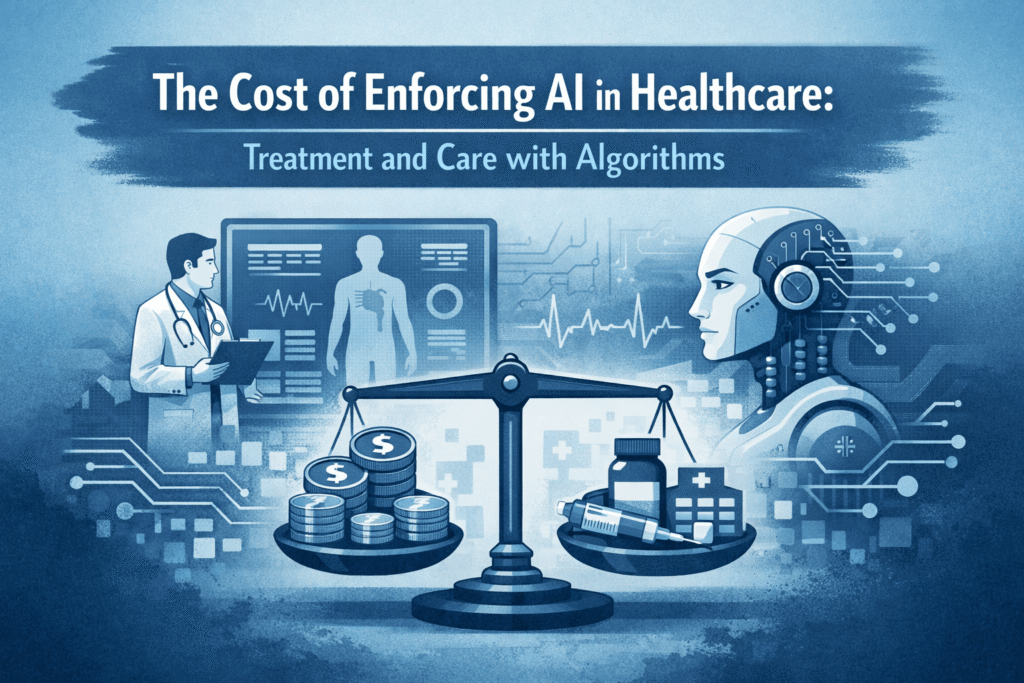
The Cost of Enforcing AI in Healthcare : Financial Benefits of AI in Healthcare
While the costs may seem high, AI promises significant long-term financial benefits:
- Reduced medical errors, lowering malpractice and treatment costs
- Faster diagnosis, increasing patient throughput
- Resource optimization, minimizing waste
- Preventive insights, reducing hospital admissions
For example, AI‐assisted radiology can accelerate image interpretation, helping radiologists detect diseases earlier and more accurately. Over time, improved outcomes and cost savings can outweigh initial expenses.
Real-World Cost Case Studies
Case Study: AI-Driven Diagnostics in Radiology
A mid-sized hospital implemented an AI imaging tool to assist radiologists. Initial costs included software licensing, integration with the EHR system, and staff training. Within one year, diagnostic time decreased by 40%, and unnecessary follow-ups decreased by 25%.
Outcome:
- Break-even period: ~18 months
- Long-term savings: Reduced diagnostic costs and increased throughput
Case Study: Predictive Algorithms for Patient Readmission
Another healthcare provider used AI models to predict risk of patient readmission. By proactively managing high-risk patients, the hospital reduced readmissions by 15%.
Outcome:
- Reduced penalties from readmission rates
- Lowered inpatient care costs
- Improved patient satisfaction
Challenges Affecting Cost and Adoption
Although AI offers financial and clinical benefits, several challenges impact cost:
Data Silos
Healthcare data is often fragmented across multiple systems, creating barriers to AI adoption and increasing integration costs.
Ethical and Bias Concerns
AI systems must be free from harmful bias. Ensuring fairness often requires additional development and auditing expenses.
Clinical Trust
Medical professionals may hesitate to rely on AI recommendations, requiring additional training and validation efforts.
How To Minimize AI Implementation Costs
Healthcare organizations can employ strategies to manage and reduce costs:
1. Start Small with Pilot Programs
Pilots allow organizations to test AI solutions on limited scales before full implementation, minimizing financial risk.
2. Partner with Established Vendors
Collaborating with experienced AI vendors can streamline deployment and reduce development costs.
3. Seek Government Grants and Funding
Many regions offer incentives for digital healthcare transformation. Applying for grants can offset investment costs.
4. Leverage Cloud Platforms
Cloud-based AI services offer flexible pricing, reducing the need for upfront infrastructure spending.
Frequently Asked Questions (People Also Ask)
How much does AI implementation cost in healthcare?
The cost of implementing AI in healthcare varies widely based on technology, scale, data requirements, and compliance needs. Initial costs can range from thousands to millions of dollars, with ongoing maintenance and training adding to long-term expenses.
Is AI cost-effective in healthcare?
Yes. Although upfront costs can be high, AI often leads to long-term savings through efficiency gains, reduced errors, and improved patient outcomes.
What are the main drivers of AI implementation costs?
Key cost drivers include:
- Data acquisition and preparation
- Technology infrastructure
- Software licensing or development
- Compliance and cybersecurity
Will AI replace healthcare jobs?
AI is designed to augment—not replace—healthcare professionals. It takes over repetitive tasks, allowing clinicians to focus on patient care.
The Cost of Enforcing AI in Healthcare: Treatment and Care with Algorithms
The cost of implementing AI in healthcare—especially for treatment and care—extends far beyond purchasing software. It includes investments in infrastructure, data management, staff training, cybersecurity, and regulatory compliance. While these costs are significant, AI’s potential for improved outcomes, operational efficiencies, and long-term cost savings makes it a worthwhile investment for many healthcare providers.
As the technology matures and becomes more accessible, the economic barriers are expected to decrease, allowing more healthcare systems to benefit from AI-driven innovations. Ultimately, understanding both the costs and the value of AI is essential for informed decision-making in the future of healthcare.