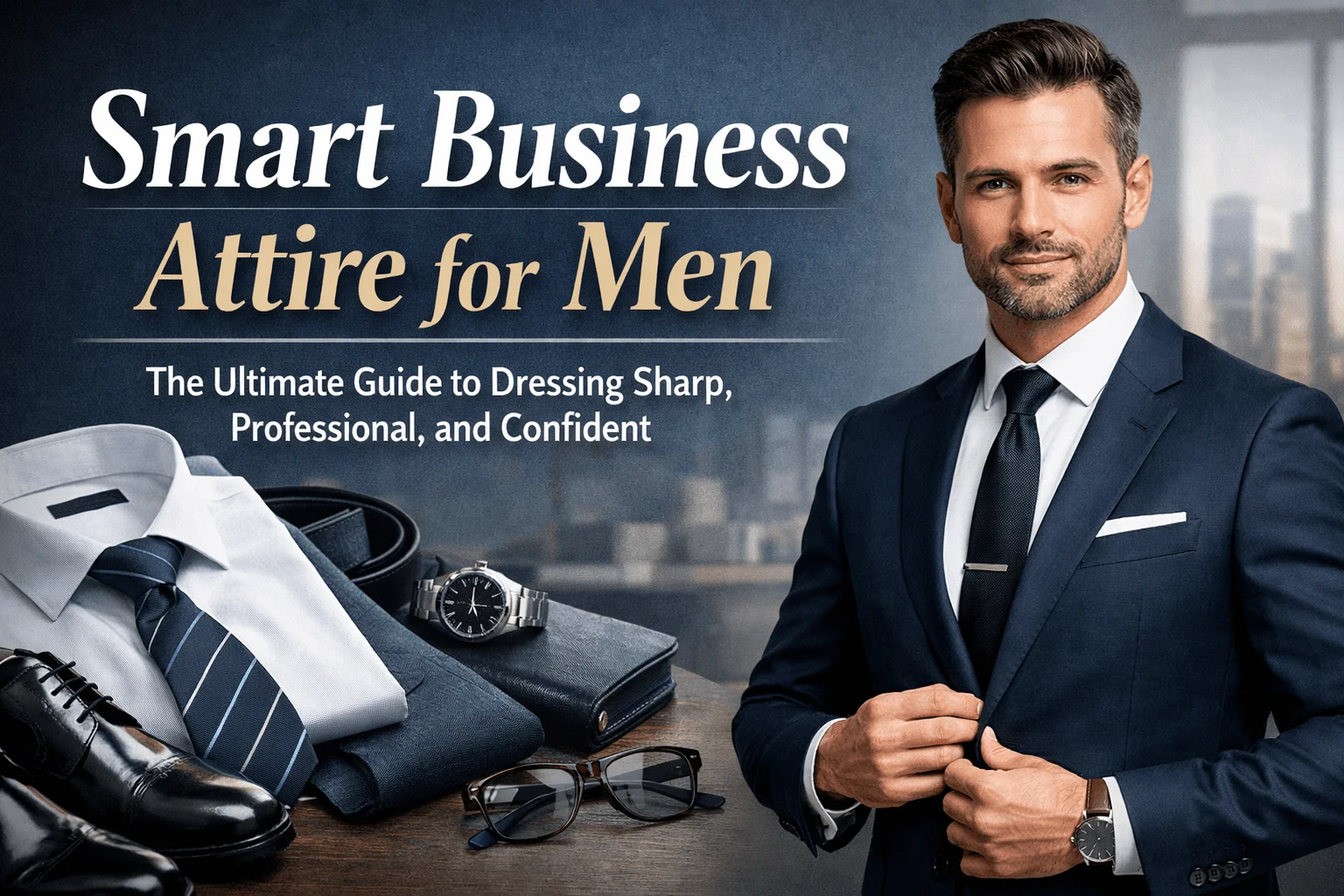
Smart Business Attire for Men: The Complete Style Guide for Modern Professionals
In today’s competitive corporate world, appearance plays a powerful role in shaping first impressions, confidence, and credibility. Smart business attire for men strikes the perfect balance between professionalism and modern style. It is not as rigid as traditional formal wear, yet far more polished than casual outfits. Whether you’re heading to the office, attending a meeting, or networking at a business event, mastering smart business attire can elevate your personal brand.
What Is Smart Business Attire for Men?
Smart business attire is a refined, professional dress code that blends classic business elements with modern, relaxed styling. It allows men to look sharp and confident without appearing overly formal.
Unlike full business formal (suits and ties) or business casual (chinos and polos), smart business attire sits comfortably in the middle—polished, structured, and stylish.
Key Characteristics:
- Clean, tailored clothing
- Neutral or muted color palettes
- High-quality fabrics
- Minimal but intentional accessories
- Professional yet contemporary appearance
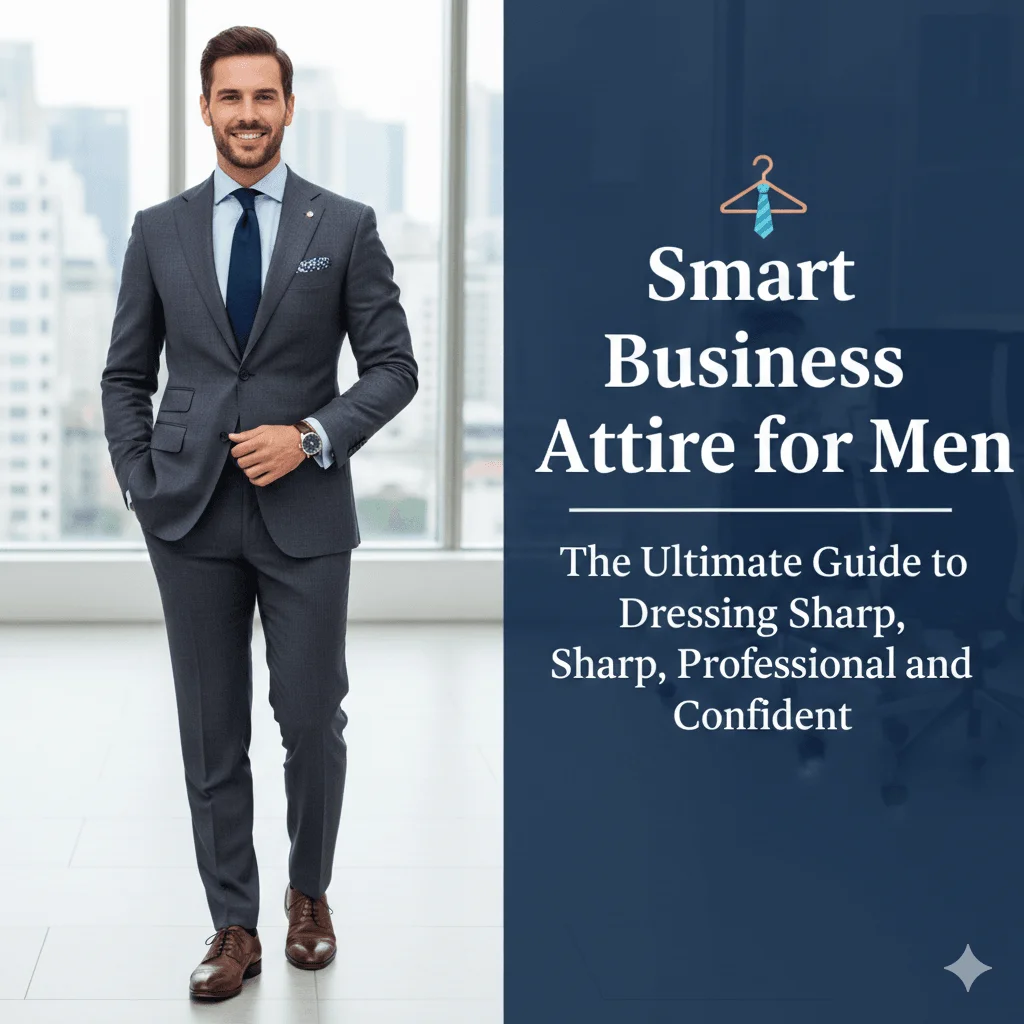
Essential Pieces of Smart Business Attire for Men
1. Tailored Blazer or Sports Jacket
A well-fitted blazer is the foundation of smart business attire. It instantly elevates any outfit.
Best choices:
- Navy, charcoal, grey, or beige
- Lightweight wool, tweed, or cotton blends
- Structured shoulders with a slim or modern fit
Pair it with dress trousers or chinos for a refined look.
2. Dress Shirts and Smart Casual Shirts
Shirts should be crisp, clean, and well-fitted. Avoid loud prints or overly casual designs.
Recommended options:
- White or light blue dress shirts
- Subtle patterns like pinstripes or micro-checks
- Oxford or poplin fabric
Ensure the shirt fits well at the shoulders and collar—wrinkles or oversized fits can ruin the entire look.
3. Trousers and Chinos
Smart business trousers should look tailored but comfortable.
Ideal choices include:
- Slim or straight-fit dress pants
- Chinos in neutral shades like beige, navy, or grey
- Wool or stretch-blend fabrics for flexibility
Avoid jeans unless your workplace explicitly allows business-casual flexibility.
4. Footwear: Professional Yet Stylish
Shoes can make or break your outfit. Always prioritize clean, polished footwear.
Top footwear options:
- Oxford shoes (classic and formal)
- Derby shoes (slightly more relaxed)
- Loafers for modern offices
- Monk straps for a bold yet professional touch
Stick to black, brown, or dark tan leather for versatility.
5. Accessories That Elevate the Look
Accessories should enhance—not overpower—your outfit.
Recommended accessories:
- Leather belt matching shoe color
- Classic wristwatch
- Minimal cufflinks
- Subtle tie or pocket square (optional)
Avoid flashy jewelry or oversized accessories in professional settings.
Smart Business Attire by Workplace Type
Corporate Offices
Stick to classic colors and tailored suits. A blazer, dress shirt, and formal shoes are essential.
Creative or Tech Workplaces
You can experiment more—smart blazers, chinos, knit polos, or even clean sneakers (if allowed).
Client Meetings & Presentations
Opt for conservative elegance. Dark blazer, crisp shirt, polished shoes, and minimal accessories.
Business Travel
Choose wrinkle-resistant fabrics, comfortable shoes, and versatile layers that transition from meetings to dinners.
Seasonal Smart Business Attire Tips
Summer
- Lightweight fabrics like linen blends or cotton
- Light colors such as beige, light grey, or pastel blue
- Loafers or breathable dress shoes
Winter
- Wool blazers, sweaters, and layered outfits
- Darker shades like charcoal, navy, or burgundy
- Overcoats and leather boots for added sophistication
Common Mistakes to Avoid
- Wearing ill-fitted clothing
- Over-accessorizing
- Wearing casual sneakers or distressed jeans
- Ignoring grooming and personal hygiene
- Mixing too many colors or patterns
Why Smart Business Attire Matters
Dressing well is more than aesthetics—it’s a strategic advantage. Smart business attire:
- Builds confidence
- Enhances credibility
- Creates positive first impressions
- Reflects professionalism and ambition
In competitive work environments, how you present yourself often influences how seriously you’re taken.
People Also Ask (FAQs)
What is the difference between business casual and smart business attire?
Business casual is more relaxed and may include polos or casual shoes. Smart business attire is more polished, often involving blazers, dress shirts, and formal shoes.
Can jeans be part of smart business attire?
Generally, no. However, in creative industries, dark, well-fitted jeans without distressing may be acceptable when paired with a blazer.
Are sneakers allowed in smart business attire?
Typically no, unless the workplace is very modern or creative. If allowed, choose minimalist leather sneakers.
What colors work best for smart business attire?
Neutral colors like navy, grey, black, beige, and white work best. They are professional and easy to mix and match.
Is a tie required for smart business attire?
Not always. Ties are optional unless the workplace or event demands a more formal appearance.
smart business attire
Smart business attire for men is about balance—combining professionalism with modern style. When done right, it enhances confidence, credibility, and comfort. Whether you’re attending meetings, leading teams, or building your personal brand, dressing smartly sets the tone for success.
By investing in well-fitted clothing, quality fabrics, and timeless designs, you can create a versatile wardrobe that works across industries and occasions.