

How to Start an Affiliate Blog in 2026: A Complete Step-by-Step Guide
Affiliate marketing continues to be one of the most lucrative online business models in 2026, with the global affiliate marketing industry projected to reach $27.78 billion by 2027. Starting an affiliate blog remains an accessible entry point for entrepreneurs looking to generate passive income. This comprehensive guide will walk you through everything you need to know to launch a successful affiliate blog this year.
Understanding Affiliate Blogging in 2026
Affiliate blogging involves creating content that promotes products or services from other companies. When readers click your unique affiliate links and make purchases, you earn a commission. The beauty of this model lies in its scalability—you create content once, and it can generate income for years.
According to recent data, 81% of brands now leverage affiliate programs, making it easier than ever to find partnership opportunities. The average affiliate marketer earns between $1,000 to $10,000 monthly, though top performers can earn six figures or more.
Choosing Your Profitable Niche
Your niche selection determines your blog’s success trajectory. Focus on areas where passion meets profitability.
Evaluating Niche Profitability
Consider these factors when selecting your niche:
- Market demand: Use tools like Google Trends and keyword research platforms to validate interest
- Commission rates: Some niches offer higher payouts than others
- Competition level: Balance between demand and market saturation
- Personal expertise: Your knowledge adds authenticity and value
How to Start an Affiliate Blog in 2026: A Complete Guide: Top Affiliate Niches for 2026
| Niche Category | Average Commission Rate | Competition Level | Growth Potential |
| Technology & Software | 20-50% | High | Excellent |
| Health & Wellness | 10-30% | Medium | Very High |
| Personal Finance | 15-40% | High | High |
| Home & Garden | 5-15% | Medium | Moderate |
| Fashion & Beauty | 8-20% | Very High | Moderate |
| Online Education | 30-50% | Medium | Excellent |
Setting Up Your Affiliate Blog Infrastructure
Domain and Hosting Selection
Your domain name should be unique and eye-catching, describe your niche, and most important include keywords. Avoid complicated spellings or overly long names.
For hosting, prioritize providers offering fast loading speeds, reliable uptime (99.9% or higher), and excellent customer support. Popular choices include SiteGround, Bluehost, and WP Engine. Expect to invest $5-30 monthly for quality hosting.
Content Management System
WordPress powers approximately 43% of all websites globally and remains the gold standard for affiliate blogs. Its flexibility, SEO capabilities, and vast plugin ecosystem make it ideal for beginners and experts alike.
Essential plugins for affiliate blogs include Yoast SEO for optimization, Pretty Links for managing affiliate URLs, and OptinMonster for building email lists.
Creating High-Quality Affiliate Content
Content quality directly correlates with affiliate success. Focus on solving problems rather than pushing products.
Content Types That Convert
Product reviews: Detailed, honest assessments of products you’ve personally tested generate trust and conversions. Include pros, cons, pricing, and alternatives.
Comparison articles: Help readers choose between similar products by highlighting key differences and use cases.
Tutorial content: Step-by-step guides incorporating product recommendations naturally within the instruction flow.
Resource lists: Curated collections of tools, products, or services for specific purposes or problems.
SEO Optimization Strategies
Search engine optimization remains crucial for organic traffic generation. In 2026, focus on:
- User intent alignment: Create content that precisely answers search queries
- E-E-A-T principles: Demonstrate Experience, Expertise, Authoritativeness, and Trustworthiness
- Core Web Vitals: Ensure fast page speed, mobile responsiveness, and excellent user experience
- Semantic keyword integration: Include related terms and phrases naturally throughout content
Studies show that the top three organic search results capture 54.4% of all clicks, making first-page rankings essential for traffic generation.
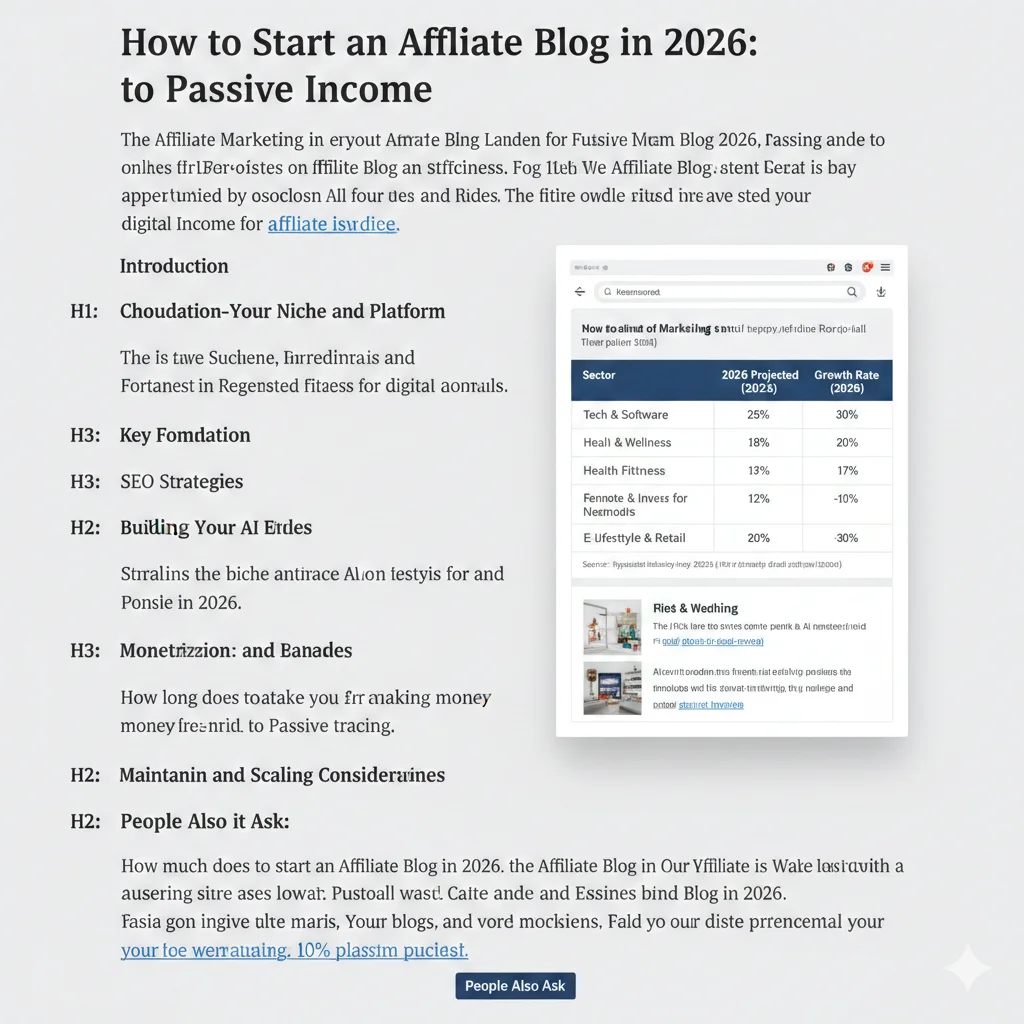
How to Start an Affiliate Blog in 2026: A Complete Guide: Building Your Affiliate Network
Selecting Affiliate Programs
Research programs thoroughly before joining. Consider commission structure (one-time versus recurring), cookie duration (30-90 days is standard), payment threshold, and program reputation.
| Program Type | Best For | Typical Commission | Cookie Duration |
| Amazon Associates | Physical products | 1-10% | 24 hours |
| ShareASale | Diverse products | 5-30% | 30-90 days |
| CJ Affiliate | Enterprise brands | 5-20% | 30-60 days |
| Individual Programs | High-ticket items | 20-50%+ | 30-120 days |
Disclosure Requirements
Transparency builds trust and ensures legal compliance. The Federal Trade Commission requires clear disclosure of affiliate relationships. Place disclaimers prominently at the beginning of posts and near affiliate links.
Driving Traffic to Your Affiliate Blog
Organic Search Strategy
Organic traffic converts best for affiliate content because visitors actively search for solutions. Invest time in comprehensive keyword research focusing on buyer intent keywords like “best,” “review,” “vs,” and “alternative.”
Target long-tail keywords with lower competition initially. Create pillar content covering broad topics, then build supporting articles targeting specific subtopics.
Social Media Marketing
Platform selection depends on your niche. Pinterest works excellently for lifestyle, home, and fashion niches. LinkedIn suits B2B and professional development content. Instagram and TikTok excel for visual products and younger demographics.
Email Marketing Foundation
Email subscribers represent your most valuable asset. They’re 3-5 times more likely to convert than social media followers. Build your list from day one using lead magnets like free guides, checklists, or exclusive content.
Monetization Timeline and Expectations
Setting realistic expectations prevents discouragement. Most successful affiliate bloggers report the following timeline:
Months 1-3: Focus on content creation and technical setup. Minimal earnings expected.
Months 4-6: Begin seeing initial traffic and sporadic commissions. Average earnings: $100-500 monthly.
Months 7-12: Traffic grows steadily. Monthly earnings typically range from $500-2,000 as content compounds.
Year 2+: Established authority and compounding content. Successful blogs earn $3,000-10,000+ monthly.
People Also Ask(FAQ’s)
How much does it cost to start an affiliate blog?
Initial costs range from $100-500 for the first year, including domain registration ($10-15), hosting ($60-360 annually), and theme/plugins ($0-100). You can start with minimal investment and scale up as you earn.
Can I start affiliate marketing with no money?
Yes, free platforms like Medium, Blogger, or social media allow you to start without website costs. However, owning your platform provides more control and long-term value.
How long does it take to make money from an affiliate blog?
Most bloggers see their first commission within 3-6 months. Sustainable income ($1,000+ monthly) typically takes 12-18 months of consistent effort.
Do I need to disclose affiliate links?
Yes, legally you must disclose affiliate relationships clearly. This builds trust and ensures FTC compliance.
What’s the best affiliate program for beginners?
Amazon Associates offers easy entry and diverse products, though commissions are lower. ShareASale and CJ Affiliate provide better rates with slightly more application requirements.
How to Start an Affiliate Blog in 2026: A Complete Step-by-Step Guide
Starting an affiliate blog in 2026 requires strategic planning, consistent effort, and patience. Success stems from providing genuine value rather than aggressive promotion. Focus on building trust with your audience through honest, helpful content that solves real problems.
Begin with thorough niche research, invest in quality hosting and domain, create comprehensive content targeting buyer intent keywords, and diversify your traffic sources. Remember that affiliate blogging is a marathon, not a sprint. The compounding nature of content creation means your efforts today will continue generating returns for years to come.
With the affiliate marketing industry continuing its growth trajectory and more brands embracing partnership programs, there’s never been a better time to start your affiliate blogging journey.
References:
- Statista. (2024). “Affiliate Marketing Industry Size Worldwide”
- Federal Trade Commission. (2025). “Endorsement Guides: What People Are Asking”
- Ahrefs. (2024). “Click-Through Rate Study”
- WordPress.org. (2025). “Usage Statistics”
- Affiliate Marketing Benchmark Report. (2024). Authority Hacker




I like how you emphasized both niche validation and realistic monetization timelines—too many guides skip over how long it actually takes to see consistent income. The section on balancing high-quality content with solid SEO strategy really stood out, especially for beginners who might focus on links over value. It would also be interesting to hear your thoughts on how AI-generated content fits into affiliate blogging in 2026 and how to keep it authentic.