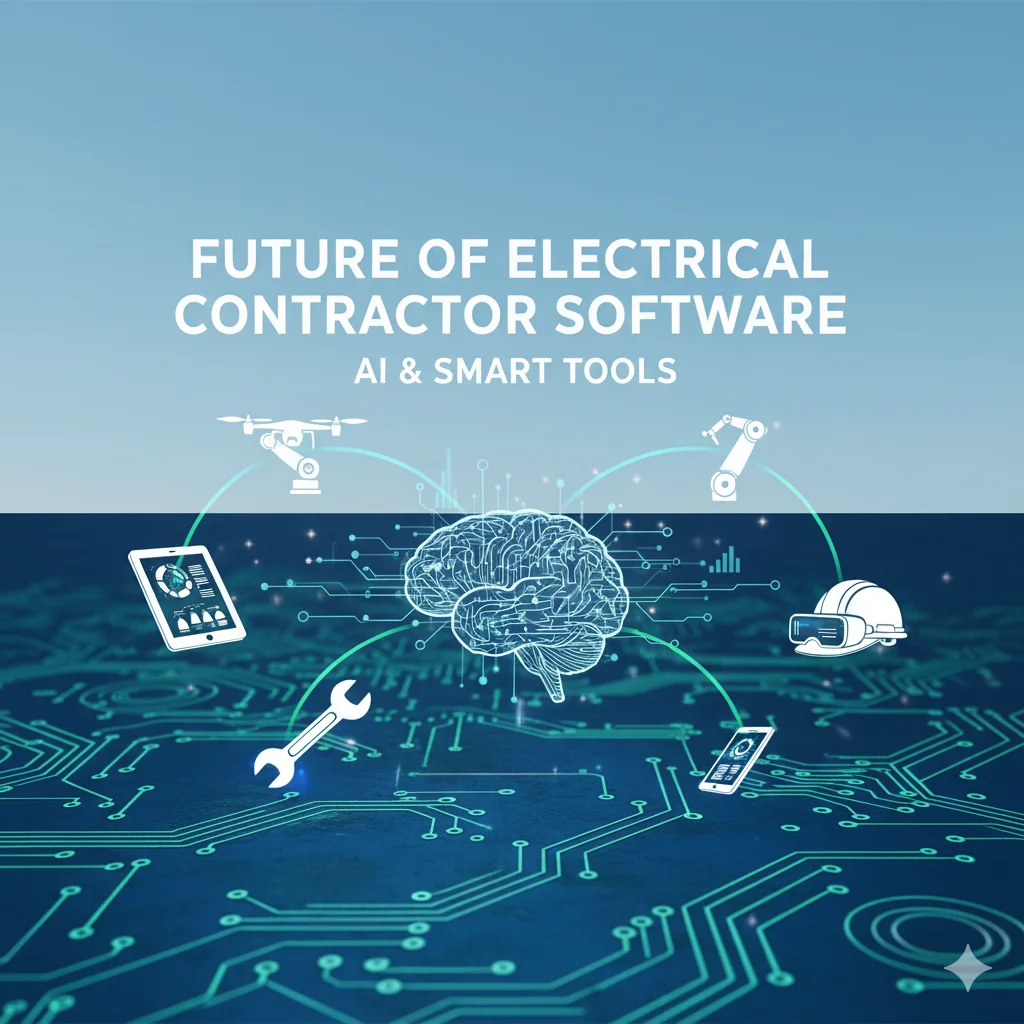
Future of Electrical Contractor Software: AI & Smart Tools
In today’s fast-moving digital world, the electrical contracting industry is undergoing rapid transformation. Traditional methods of job planning, management, and customer service are no longer enough. Electrical contractors are now adopting advanced software empowered by Artificial Intelligence (AI) and smart automation tools to stay competitive, streamline operations, and improve profitability.
In this blog, we explore how cutting-edge technologies are reshaping electrical contractor software, what trends are driving change, and how businesses can prepare for the future.
Why Electrical Contractor Software Matters Today
Electrical contractors manage multiple moving parts—projects, teams, materials, compliance, billing, and customer relationships. Without centralized tools, inefficiencies grow, errors increase, and profit margins shrink.
Electrical contractor software serves as the digital backbone for businesses to:
- Plan and schedule jobs
- Track labor and equipment
- Generate accurate estimates and invoices
- Improve team communication
- Maintain compliance with safety and electrical codes
But the future isn’t just about managing tasks better. It’s about smart automation, predictive insights, and AI-driven decision support that can transform everyday workflows.
The Rise of AI in Electrical Contractor Tools
Artificial Intelligence (AI) is no more a shadow concept. Today, AI is being embedded within contractor management software to help automate complex tasks and deliver deep insights.
AI-Driven Estimating and Bidding
Estimating is one of the most time-consuming parts of electrical contracting. AI can:
- Analyze historical projects
- Predict material usage
- Recognize patterns in labor costs
- Optimize bids for better profitability
With machine learning (ML), the software becomes smarter over time—improving accuracy and minimizing guesswork.
Intelligent Scheduling and Dispatching
AI tools dynamically schedule jobs based on:
- Real-time crew availability
- Skill sets and certifications
- Traffic and travel time
- Priority level of tasks
The result? Faster service delivery, reduced downtime, and improved customer satisfaction.
Predictive Maintenance and IoT Integration
Connected devices like smart sensors and IoT tools allow contractors to:
- Monitor equipment health
- Predict failures before they occur
- Schedule preventive repairs
- Reduce emergency call-outs
AI analyzes sensor data and flags issues, saving money and extending equipment life.
Smart Tools Enhancing Field Work
Smart tools aren’t just software modules—they include handheld devices, mobile apps, and wearables that connect field crews with the digital platform.
Mobile Apps for Technicians
Modern electrical contractors rely on intuitive mobile apps to:
- Access job details offline
- Update work status in real time
- Record photos, voice notes, and measurements
- Issue invoices at the job site
These apps reduce paperwork, speed up documentation, and strengthen field-office communication.
Augmented Reality (AR) and Smart Glasses
Augmented Reality is revolutionizing field diagnostics. With AR:
- Technicians overlay wiring diagrams onto real equipment
- Receive step-by-step instructions visually
- Collaborate remotely with senior engineers
This tech reduces errors, shortens training cycles, and improves first-time fix rates.
Key Future Trends in Electrical Contractor Software
The software of tomorrow isn’t simply better versions of today’s tools. It’s smarter, more connected, and easier to use.
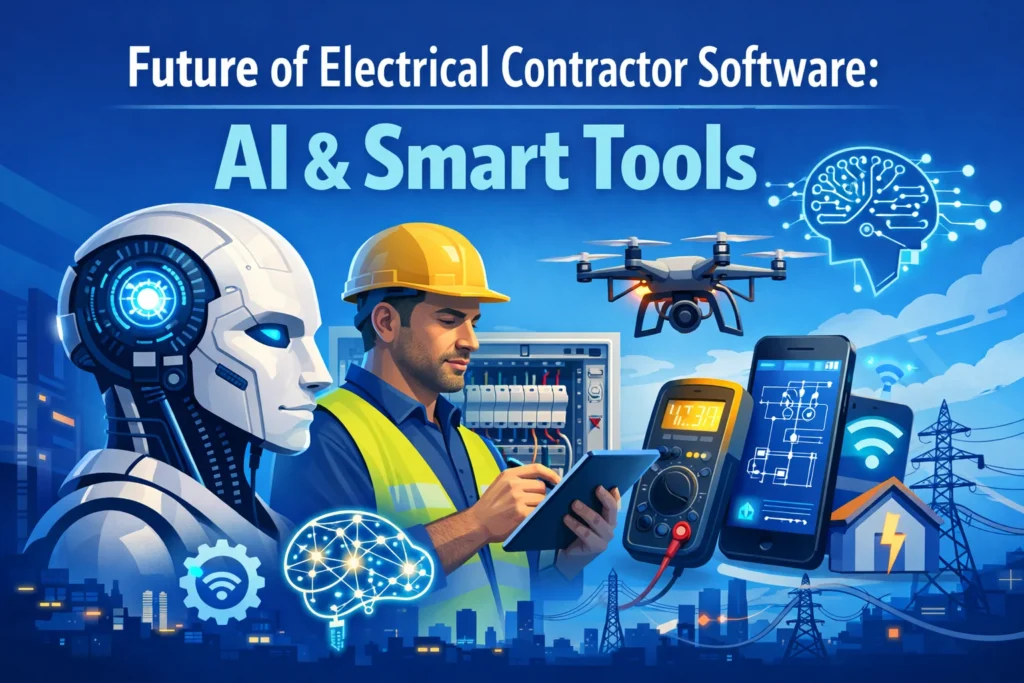
Future of Electrical Contractor Software: AI & Smart Tools: 1. Cloud-First Platforms
Cloud-based electrical contractor software allows:
- Real-time collaboration
- Instant access from any device
- Seamless updates and scalability
- Lower IT overhead
Contractors can manage multiple job sites without being tied to physical servers.
2. Integration with Business Systems
Future tools will integrate tightly with:
- Accounting software (QuickBooks, Xero)
- CRM systems
- Supply chain & inventory management
- Supplier ordering portals
This eliminates double-entry work and ensures data flows smoothly across systems.
3. Voice Recognition and Automation
With voice technologies:
- Technicians can update tasks hands-free
- Field notes convert automatically into reports
- AI auto-generates job summaries
Voice automation reduces administrative burden and increases productivity.
4. Advanced Analytics Dashboards
Data isn’t valuable unless it’s actionable. Future dashboards will:
- Show real-time performance metrics
- Highlight job profitability
- Predict cash flow trends
- Benchmark teams and regions
This allows managers to make evidence-based decisions rather than relying on gut feelings.
Benefits of AI & Smart Tools for Electrical Contractors
Investing in next-gen software is more than a technology upgrade—it’s a competitive advantage.
Increased Efficiency
Automation reduces manual tasks and human error. Workflows that once took too long time can now be completed in minutes.
Better Profit Margins
AI-driven estimating and predictive analytics help contractors:
- Price jobs accurately
- Avoid material waste
- Forecast costs with confidence
Improved Customer Satisfaction
Smart scheduling, faster response times, and transparent communication lead to happier clients and more repeat business.
Enhanced Safety and Compliance
Digital checklists, safety alerts, and integrated compliance tracking reduce the risk of fines and accidents.
Challenges to Adoption
Despite clear advantages, electrical contractors face obstacles in adopting AI and smart tools.
Cost Concerns
New technologies require investment. Small firms may hesitate due to upfront costs and subscription fees.
Learning Curve
Teams need training to adapt to new tools. Resistance to change may slow implementation.
Data Security
Cloud-based platforms require strong cybersecurity measures to protect sensitive business and client data.
However, many vendors now provide scalable pricing, onboarding support, and secure platforms tailored to contractor needs.
How to Choose the Right Electrical Contractor Software
Here’s a checklist to guide your selection:
Core Features
- Project management
- Estimating and bidding
- Invoicing and payments
- Scheduling and dispatching
Smart Capabilities
- AI-based insights and predictions
- Mobile technician apps
- Real-time notifications
Integrations
- Accounting tools
- CRM systems
- Hardware devices (barcodes, scanners)
Customer Support
- Training resources
- 24/7 helpdesk
- Onboarding support
Scalability
- Multi-user support
- Cloud storage
- Add-on modules for future needs
Implementation Best Practices
Even the best software fails without the right implementation strategy.
Future of Electrical Contractor Software: AI & Smart Tools: 1. Start with Clear Goals
Identify what you want to achieve:
- Reduce estimating time?
- Improve dispatch accuracy?
- Automate billing?
This will help you choose the right solution.
2. Train Your Team
Invest in hands-on training sessions. Encourage staff to learn features gradually rather than all at once.
3. Set KPIs to Track Success
Monitor performance metrics like:
- Average job time
- Estimating accuracy
- Customer response time
Data helps justify ROI and guide improvements.
People Also Ask (FAQs)
Q: What is electrical contractor software?
Electrical contractor software is a digital system designed to manage all aspects of an electrical contracting business, including estimating, scheduling, project management, dispatching, invoicing, and customer communication. It centralizes data and automates key processes to increase efficiency and profitability.
Q: How does AI improve electrical estimating?
AI improves electrical estimating by analyzing past job data, predicting material and labor costs, identifying pricing patterns, and generating accurate estimates automatically. This reduces guesswork, saves time, and improves bid competitiveness.
Q: Why is mobile technology important for electrical contractors?
Mobile technology allows field technicians to access job details, update statuses, capture data, and communicate with the office in real time. This speeds up workflows, reduces paperwork, and improves accuracy.
Q: Can AI replace electrical contractors?
AI isn’t replacing human contractors but enhancing their capabilities. AI automates repetitive tasks and provides insights, while human expertise remains essential for complex decision-making, on-site problem-solving, and customer interaction.
Q: What features should electrical contractor software have?
The best software includes:
- Job costing and estimates
- Scheduling and dispatching
- Invoicing and payments
- Mobile access
- AI insights and analytics
- Integration with accounting tools
The Road Ahead: What to Expect in the Next Decade
The future of electrical contractor software is exciting. Here’s what we can expect:
Smarter AI Models
Software will become predictive rather than reactive—forecasting costs, resource needs, and risks before they happen.
Autonomous Field Tools
Robotics and drones might assist with site inspections, wiring diagnostics, and safety audits.
Fully Connected Ecosystems
Software will integrate seamlessly with suppliers, customers, and subcontractors, creating a unified digital ecosystem.
Personalized Customer Experiences
AI will enable tailored proposals, communication preferences, and proactive service notifications for clients.
AI & Smart Tools
Electrical contractor software is no longer just a project management tool—it’s becoming the central nervous system of modern contracting businesses. With AI and smart tools, contractors can automate mundane tasks, make smarter decisions, improve customer satisfaction, and scale their operations with confidence.
By embracing these innovations now, electrical contractors position themselves for future growth and long-term success in an increasingly competitive marketplace.