Business Strategy Tools for Small Business: Your Complete Guide to Strategic Success
Running a small business without a clear strategy is like navigating without a map. You might eventually reach your destination, but the journey will be unnecessarily difficult and time-consuming. Business strategy tools help small business owners make informed decisions, allocate resources effectively, and stay competitive in today’s dynamic market.
Why Small Businesses Need Strategy Tools
Small businesses face unique challenges that larger corporations don’t encounter. Limited resources, tight budgets, and wearing multiple hats are daily realities for most small business owners. Strategy tools level the playing field by providing frameworks that help you think like a strategist, even without a dedicated planning department.
These tools enable you to identify opportunities, understand your competitive position, anticipate market changes, and make data-driven decisions. Rather than reacting to circumstances, you’ll be proactively shaping your business’s future.
Business Strategy Tools for Small Business: Essential Business Strategy Tools for Small Businesses
SWOT Analysis: Understanding Your Business Position
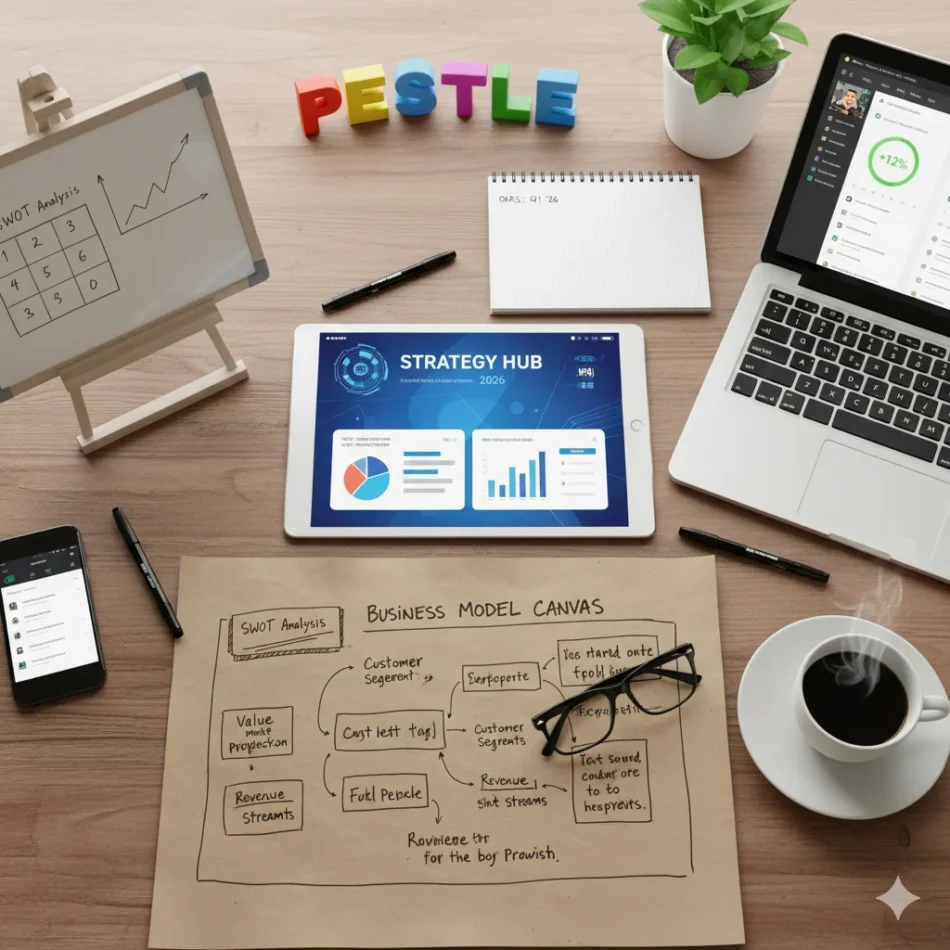
SWOT Analysis remains one of the most valuable and accessible strategy tools for small businesses. This framework helps you evaluate your Strengths, Weaknesses, Opportunities, and Threats.
Strengths are internal advantages your business possesses, such as unique expertise, loyal customer relationships, or proprietary technology. Weaknesses are internal limitations that might hold you back, like limited capital or skill gaps in your team.
Opportunities represent external factors you can leverage for growth, such as emerging market trends or underserved customer segments. Threats are external challenges that could impact your business, including new competitors or regulatory changes.
Conducting a SWOT analysis quarterly helps you stay aligned with market realities and adjust your strategy accordingly. The beauty of this tool lies in its simplicity—you can complete a basic SWOT analysis in under an hour, yet gain insights that inform months of strategic decisions.
Business Model Canvas: Visualizing Your Value Proposition
The Business Model Canvas is a one-page strategic management tool that helps you describe, design, and pivot your business model. Created by Alexander Osterwalder, this framework breaks down your business into nine essential building blocks.
These blocks include your value propositions, customer segments, channels, customer relationships, revenue streams, key resources, key activities, key partnerships, and cost structure. By mapping these elements visually, you can quickly identify gaps, dependencies, and opportunities for innovation.
For small businesses, the Business Model Canvas is particularly useful when exploring new market segments, launching new products, or identifying ways to differentiate from competitors. It encourages holistic thinking about how all aspects of your business work together.
Porter’s Five Forces: Analyzing Competitive Dynamics
Understanding your competitive environment is crucial for sustainable success. Porter’s Five Forces framework helps you analyze the competitive intensity and attractiveness of your market.
The five forces include competitive rivalry, threat of new entrants, threat of substitutes, bargaining power of suppliers, and bargaining power of buyers. By examining each force, you can identify where you have leverage and where you’re vulnerable.
For instance, if your analysis reveals high bargaining power of suppliers, you might develop relationships with alternative vendors or consider vertical integration. If competitive rivalry is intense, you might focus on differentiation or niche positioning.
Digital Strategy Tools for Modern Small Businesses
Google Analytics: Data-Driven Decision Making
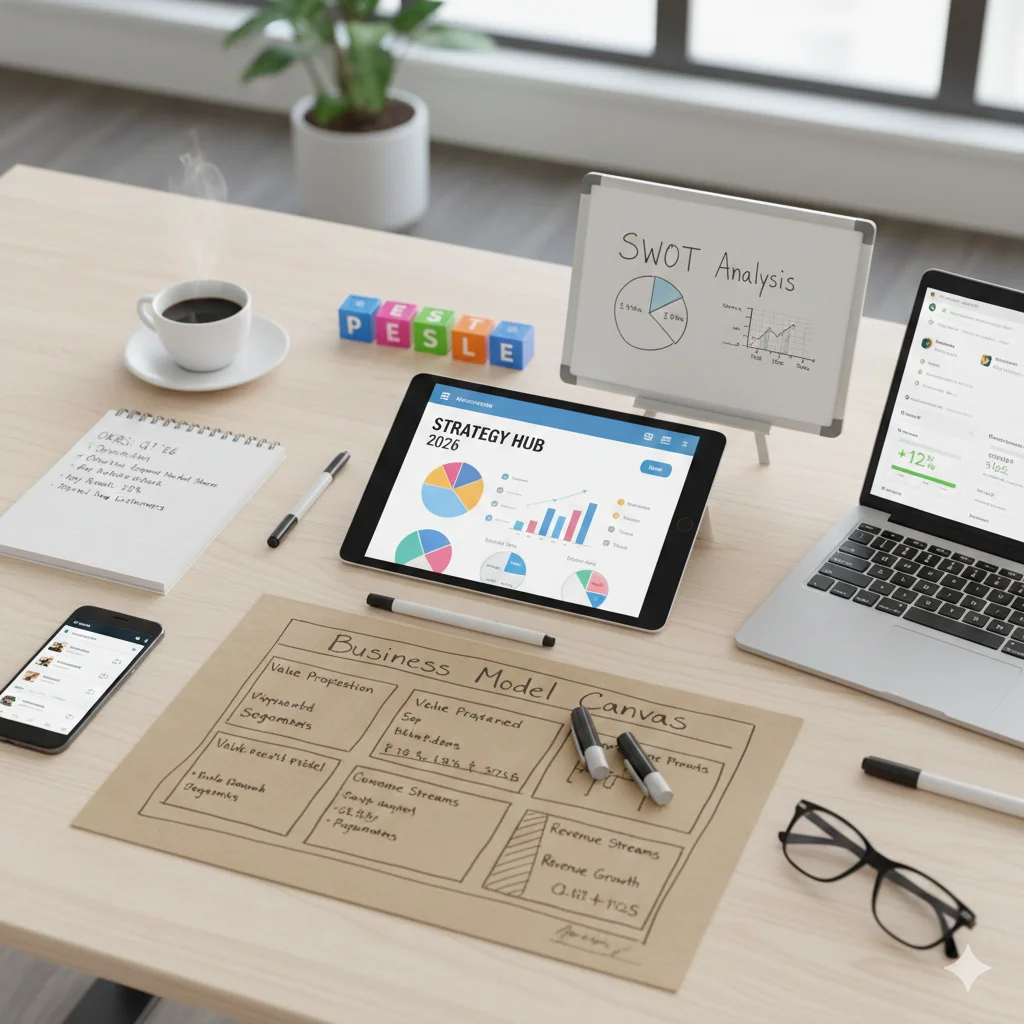
In today’s digital economy, understanding your online presence is non-negotiable. Google Analytics provides comprehensive insights into website traffic, user behavior, and conversion patterns—completely free for small businesses.
This tool reveals which marketing channels drive the most valuable traffic, which pages engage visitors, and where potential customers drop off. These insights help you optimize your digital strategy and allocate marketing budgets more effectively.
Small businesses can use Google Analytics to test different value propositions, identify high-performing content, and understand customer journey patterns. The key is setting up clear goals and regularly reviewing your data to inform strategic decisions.
Social Media Analytics Tools: Understanding Your Audience
Platforms like Meta Business Suite, LinkedIn Analytics, and Twitter Analytics offer built-in tools that help you understand audience engagement and content performance. These insights are invaluable for refining your content strategy and identifying what resonates with your target market.
By tracking metrics like engagement rates, reach, and audience demographics, you can make strategic decisions about content creation, posting schedules, and platform priorities. Many small businesses discover that they can achieve better results by focusing deeply on one or two platforms rather than spreading themselves thin across many.
Financial Strategy Tools
Break-Even Analysis: Understanding Profitability
Break-even analysis helps you determine when your business will become profitable by calculating the point where total revenue equals total costs. This fundamental financial tool informs pricing decisions, cost management strategies, and sales targets.
For small businesses launching new products or entering new markets, break-even analysis provides realistic expectations about the investment required and timeline to profitability. It helps you avoid undercapitalized ventures and make informed go/no-go decisions.
Cash Flow Forecasting Tools
Cash flow is bigger hurdle for small businesses than profitability. Simple cash flow forecasting tools—even basic spreadsheets—help you anticipate cash shortages and surpluses, enabling proactive financial management.
By projecting incoming revenue and outgoing expenses, you can identify periods when you’ll need additional working capital and plan accordingly. Many accounting software platforms like QuickBooks and Xero include cash flow forecasting features designed specifically for small businesses.
Implementation Strategy Tools
OKRs (Objectives and Key Results): Goal Setting Framework
OKRs help translate strategy into action by establishing clear objectives and measurable key results. This framework, popularized by companies like Google, is equally valuable for small businesses.
An objective opinion “what do we want to achieve?” while key reply “how will we know we’re making progress?” For example, an objective might be “Become the preferred provider for eco-conscious consumers in our region,” with key results like “Achieve 30% revenue from sustainable product line” and “Earn 50 positive reviews mentioning sustainability.”
Gantt Charts: Project Planning and Execution
When implementing strategic initiatives, Gantt charts help you visualize project timelines, dependencies, and resource allocation. Free tools like Trello, Asana, and Monday.com offer Gantt chart features that make complex projects manageable.
For small businesses with limited teams, these visual planning tools ensure everyone understands priorities, deadlines, and how their work contributes to strategic goals.
Choosing the Right Tools for Your Business
Not every tool is right for every business. Start by identifying your most pressing strategic challenges. Are you struggling with competitive positioning? Focus on Porter’s Five Forces and SWOT analysis. Need to clarify your business model? Start with the Business Model Canvas.
Begin with free or low-cost tools and gradually incorporate more sophisticated solutions as your business grows. Many small businesses find that simple, consistently applied tools deliver better results than complex systems that go unused.
The most effective approach is combining complementary tools. For instance, use SWOT analysis to identify strategic priorities, OKRs to set goals, and Gantt charts to plan execution. This integrated approach ensures your strategy flows from analysis through planning to implementation.
Business Strategy Tools for Small Business: People Also Ask
What is the best free business strategy tool for small businesses?
SWOT Analysis is the best free business strategy tool for most small businesses. It requires no special software—just a notepad or simple document—and provides valuable insights into your competitive position. Google Analytics is another powerful free tool that helps you understand digital performance and customer behavior.
How often should small businesses review their strategy?
Small businesses should conduct a comprehensive strategy review quarterly, with lighter monthly check-ins on key metrics and progress toward goals. Market conditions change rapidly, especially in digital-first industries, so frequent reviews help you stay agile and responsive.
Can small businesses use the same strategy tools as large corporations?
Yes, most strategic frameworks scale effectively from small businesses to large corporations. Tools like SWOT Analysis, Porter’s Five Forces, and Business Model Canvas work regardless of company size. The difference is that small businesses can implement and iterate faster, turning strategic insights into action more quickly.
What’s the difference between business strategy tools and business planning tools?
Business strategy tools help you make decisions about competitive positioning, market opportunities, and long-term direction. Business planning tools help you document and execute those strategic decisions. Strategy tools answer “what should we do and why?” while planning tools address “how and when will we do it?”
Do I need expensive software to implement business strategy?
No, many of the most effective business strategy tools require no special software. SWOT Analysis, Porter’s Five Forces, and Business Model Canvas can be completed with pen and paper or basic word processing software. As your needs grow, affordable options like Google Workspace, Trello, and Canva provide professional capabilities without enterprise pricing.