Business Strategy Checklist for 2026: A Complete Roadmap for Sustainable Growth
This Business Strategy Checklist for 2026 is designed to help entrepreneurs, startups, and established organizations build resilience, stay competitive, and unlock sustainable growth. Whether you’re refining an existing plan or building one from scratch, this guide covers every essential step—aligned with real-world business challenges and future trends.
Why a Business Strategy Is Critical in 2026
The business environment in 2026 will be shaped by rapid innovation, automation, and changing customer expectations. Businesses that lose to adapt danger fade away..
A strong business strategy helps you:
- Navigate uncertainty and market volatility
- Make informed, data-driven decisions
- Align teams around shared goals
- Optimize resources and reduce waste
- Build long-term competitive advantage
In short, strategy is no longer optional—it’s your survival toolkit.
1. Market & Industry Analysis
Understand Industry Trends
Before setting goals, you must understand where your industry is heading. Trends such as AI adoption, sustainability, remote work, and personalization will heavily influence business success in 2026.
Action Steps:
- Monitor industry reports and market forecasts
- Track emerging technologies and regulations
- Identify changing customer behaviors
Analyze Your Competition
A deep competitor analysis helps identify gaps and opportunities.
Focus on:
- Competitor strengths and weaknesses
- Pricing strategies
- Customer experience models
- Market positioning
Understanding what others do well—and where they fail—allows you to position your brand strategically.
2. Define Clear Business Goals and Objectives
Set SMART Goals
Every successful strategy begins with well-defined goals. Ensure your goals are:
- Specific – Clear and focused
- Measurable – Backed by data
- Achievable – Realistic within your resources
- Relevant – Aligned with your mission
- Time-bound – Assigned deadlines
Example:
Increase online sales by 30% by the end of 2026.
Align Goals Across Departments
Marketing, sales, finance, and operations must work toward the same objectives to avoid silos and inefficiencies.
3. Customer-Centric Business Planning
Understand Your Target Audience
In 2026, personalization is no longer optional. Businesses must deeply understand their customers.
Key insights to gather:
- Demographics and behavior
- Pain points and needs
- Buying motivations
Use data analytics, customer feedback, and surveys to refine your understanding.
Improve Customer Experience (CX)
Customer experience is a major competitive advantage.
Focus on:
- Seamless omnichannel engagement
- Faster response times
- Personalized communication
- Post-purchase support
Happy customers drive loyalty, referrals, and long-term revenue.
4. Digital Transformation & Technology Strategy
Embrace Automation and AI
Technology will define business success in 2026.
Key areas to adopt automation:
- Customer support (chatbots, AI assistants)
- Marketing automation
- Inventory and operations management
- Data analysis and forecasting
Strengthen Cybersecurity
With digital growth comes increased risk.
Essential measures:
- Strong data protection policies
- Regular security audits
- Employee cybersecurity training
- Compliance with data regulations
5. Financial Planning and Risk Management
Create a Solid Financial Plan
Strong financial planning ensures business continuity and scalability.
Include:
- Revenue projections
- Cost control strategies
- Cash flow management
- Emergency funds
Identify and Manage Risks
Potential risks include economic downturns, supply chain disruptions, and regulatory changes.
Risk management checklist:
- Identify internal and external risks
- Develop contingency plans
- Review insurance coverage
- Monitor financial health regularly
6. Marketing, Branding & Growth Strategy
Build a Strong Brand Identity
Your brand represents your promise to customers.
Focus areas:
- Clear value proposition
- Consistent visual identity
- Authentic brand voice
Data-Driven Marketing Strategy
Modern marketing relies on data and personalization.
High-impact channels include:
- SEO and content marketing
- Social media platforms
- Email marketing
- Influencer and partnership marketing
Track performance metrics to continuously optimize campaigns.
7. Talent Management and Company Culture
Hiring for the Future
The right people drive long-term success.
Best practices:
- Hire for adaptability and skill diversity
- Embrace remote and hybrid work models
- Build inclusive hiring practices
Employee Development & Retention
High-performing teams require continuous learning.
Focus on:
- Upskilling and reskilling programs
- Leadership development
- Employee engagement and recognition
A motivated workforce directly impacts productivity and innovation.
8. Sustainability and Social Responsibility
Build a Sustainable Business Model
Sustainability is no longer optional—customers expect responsible businesses.
Key initiatives:
- Reduce environmental impact
- Adopt ethical sourcing
- Improve energy efficiency
Corporate Social Responsibility (CSR)
Brands that contribute positively to society build stronger trust and loyalty.
9. Performance Tracking and Continuous Improvement
Define Key Performance Indicators (KPIs)
Measure what matters most.
Examples:
- Revenue growth
- Customer acquisition cost
- Customer lifetime value
- Employee satisfaction
Review and Optimize Regularly
Conduct quarterly strategy reviews to adapt to changing market conditions and improve outcomes.
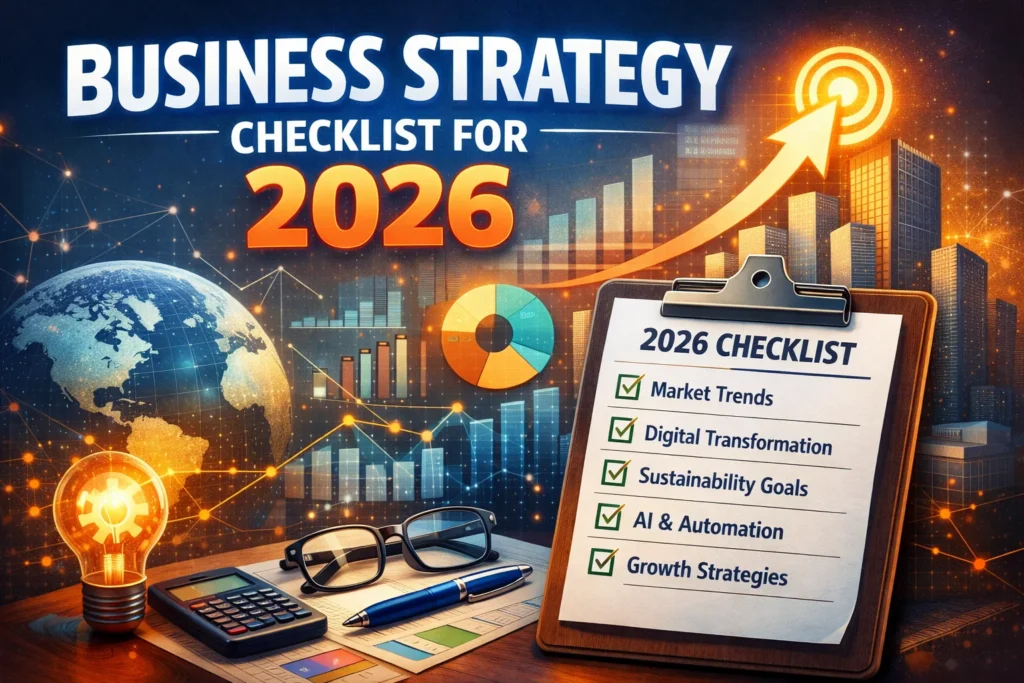
Checklist for 2026
- Market and competitor analysis
- Clear, measurable business goals
- Customer-focused approach
- Digital transformation roadmap
- Financial and risk management plan
- Strong branding and marketing strategy
- Talent development and culture building
- Sustainability and ethical practices
- Continuous performance evaluation
People Also Ask (FAQs)
What is a business strategy checklist?
A business strategy checklist is a structured framework that outlines key actions and considerations needed to plan, execute, and grow a business effectively.
Why is a business strategy important in 2026?
With rapid technological change and evolving customer expectations, a clear strategy helps businesses remain competitive, resilient, and profitable.
How often should a business update its strategy?
Ideally, businesses should review their strategy quarterly and conduct a full update annually.
What are the biggest business challenges in 2026?
Common challenges include digital transformation, cybersecurity threats, talent shortages, rising competition, and economic uncertainty.
Can small businesses use this strategy checklist?
Yes. This checklist is scalable and works for startups, small businesses, and large enterprises alike.
Business Strategy Checklist
A well-structured business strategy checklist for 2026 is more than a planning tool—it’s a roadmap for sustainable success. By focusing on innovation, customer needs, operational efficiency, and long-term vision, businesses can confidently navigate the future and stay ahead of the competition.
Start planning today, because the businesses that prepare now will lead tomorrow.