Home Business Ideas 2026 – work from home opportunities
Business · Entrepreneurship
Home Business Ideas 2026: The Most Profitable Opportunities You Can Start Today
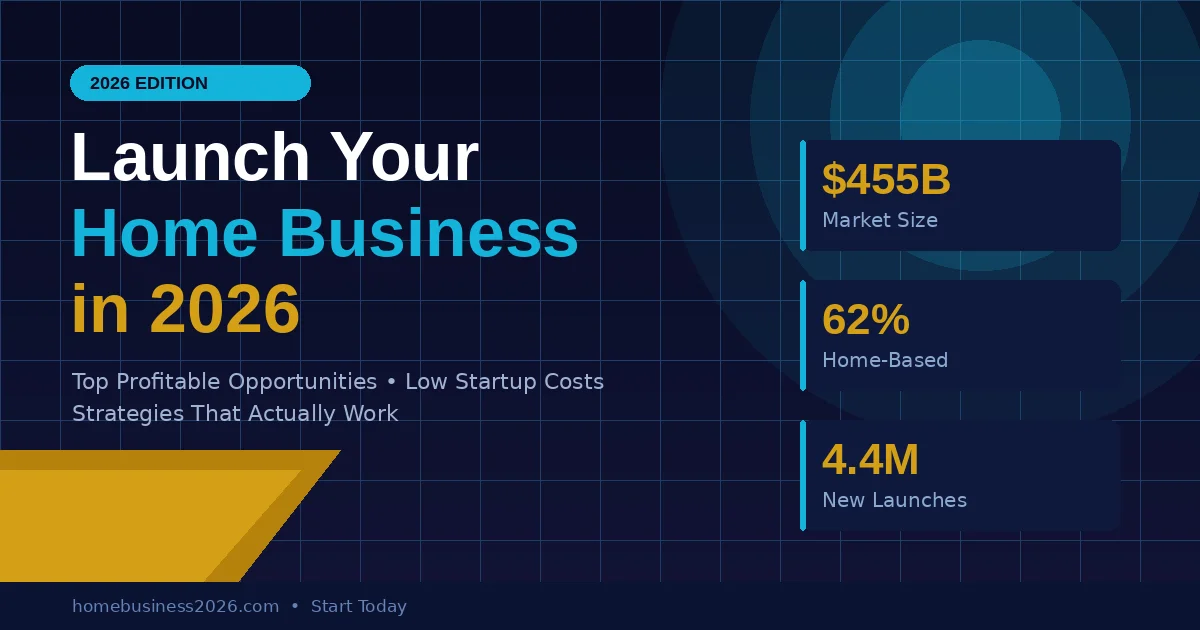
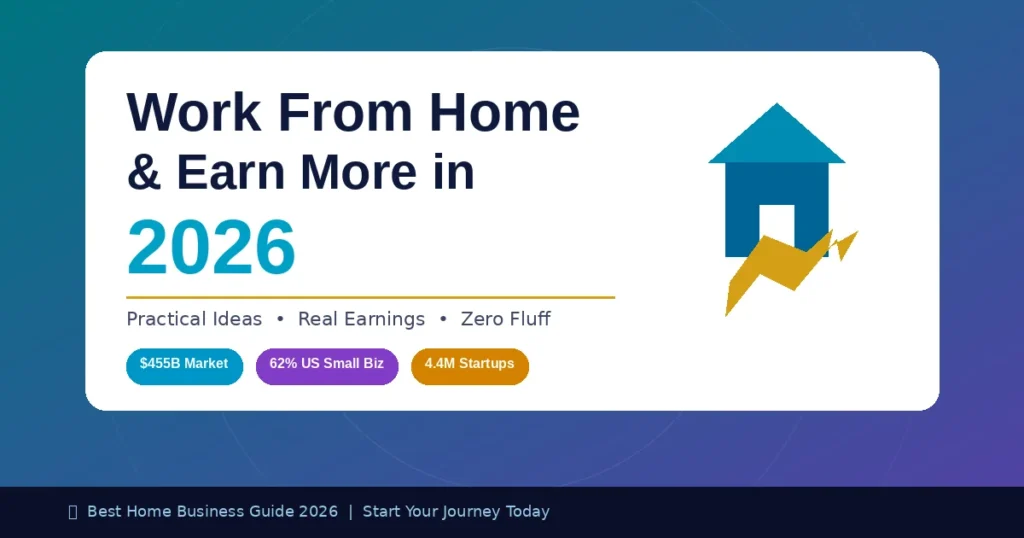
$455BGlobal Home-Based Business Market by 2026
62%of U.S. Small Businesses Are Home-Based
$10K+Average Monthly Earnings — Top Niches
4.4MNew Home Businesses Launched in 2025
The era of the 9-to-5 grind is giving way to something more flexible, more autonomous, and — for many entrepreneurs — far more lucrative. With remote infrastructure now deeply embedded in modern society, 2026 is arguably the best year in history to start a home business. Whether you have $0 or $5,000 in startup capital, there’s a niche that fits your skills, schedule, and ambitions.
According to the U.S. Small Business Administration (SBA), over 62% of all small businesses in the United States are currently home-based — and that number is climbing. This guide breaks down the most profitable, in-demand home business ideas for 2026, complete with startup costs, revenue potential, and insider tips to help you launch confidently.
“The home is the new headquarters. Entrepreneurs who leverage low-overhead models in 2026 will have a structural advantage over traditional businesses.”— Forbes Business Council, 2025 Annual Outlook Report
Why 2026 Is the Perfect Year to Start a Home Business
Three powerful forces converge in 2026 to make home entrepreneurship more accessible and profitable than ever before: the maturity of AI tools, the explosion of the creator economy, and the permanent normalization of remote commerce. Platforms like Etsy, Shopify, Upwork, and TikTok Shop have collectively lowered the barrier to entry so much that a teenager with a smartphone can build a four-figure monthly income.
Key Market Drivers in 2026
The global gig economy is projected to reach $873 billion by 2028 (Statista, 2025). Meanwhile, AI automation tools have slashed the time required for tasks like content creation, customer service, and financial bookkeeping — giving solo entrepreneurs the productivity bandwidth of a small team. Add in the rise of digital-first consumers who prefer buying from independent creators and micro-brands, and the landscape has never been more favorable.
Top Home Business Ideas for 2026: At a Glance
The table below summarizes the most viable home business opportunities this year, rated by startup cost, income ceiling, and market growth trend.
| Business Idea | Startup Cost | Monthly Earning Potential | Demand Trend | Skill Level |
| AI-Powered Freelance Writing | $0 – $100 | $2,000 – $15,000 | 📈 Very High | Beginner–Intermediate |
| E-Commerce / Dropshipping | $200 – $1,500 | $1,500 – $20,000 | 📈 High | Intermediate |
| Online Tutoring / Coaching | $0 – $200 | $2,500 – $12,000 | 📈 High | Beginner–Expert |
| Digital Product Creation | $50 – $500 | $1,000 – $50,000+ | 📈 Very High | Intermediate |
| Social Media Management | $0 – $150 | $2,000 – $10,000 | 📈 High | Beginner–Intermediate |
| Virtual Assistant Services | $0 – $100 | $1,500 – $8,000 | ➡️ Steady | Beginner |
| Print-on-Demand Store | $0 – $300 | $500 – $7,000 | ➡️ Steady | Beginner |
| Web / App Development | $0 – $500 | $5,000 – $30,000+ | 📈 Very High | Advanced |
| Handmade / Craft Business | $100 – $1,000 | $500 – $6,000 | ➡️ Steady | Beginner |
| YouTube / Podcast Creation | $200 – $1,500 | $500 – $25,000+ | 📈 High | Intermediate |
Best Home Business Ideas for 2026 – work from home opportunities
1. AI-Assisted Freelance Writing & Content Strategy
Content remains king — and in 2026, the smartest freelancers are pairing their human creativity with AI tools like Claude and ChatGPT to deliver faster, higher-quality output. Businesses of every size need blog posts, newsletters, SEO content, and white papers. Platforms like Contra, Upwork, and LinkedIn Pro make it easy to build a client base without any upfront investment. Skilled writers with niche expertise (finance, health, SaaS) routinely earn $0.20–$1.00 per word, translating to $5,000–$15,000/month at full capacity.
2. Selling Digital Products
Digital products — eBooks, Notion templates, Lightroom presets, online courses, and stock photography — represent one of the highest-margin businesses possible. You create the product once and sell it infinitely with zero inventory cost. The e-learning market alone is expected to hit $602 billion by 2030 (Global Market Insights). Platforms like Gumroad, Teachable, and Etsy Digital make storefronts easy to set up in a single afternoon.
3. E-Commerce & Dropshipping
Global e-commerce sales are forecast to exceed $7.9 trillion in 2026 (eMarketer). Dropshipping eliminates the need for inventory — you simply list products, and a supplier ships directly to your customer. Niches like eco-friendly home goods, pet accessories, and personalized gifts continue to outperform. Tools like Shopify, DSers, and Zendrop have made the operational side almost plug-and-play.
4. Online Tutoring & Coaching
Post-pandemic, the appetite for online learning is permanent. Whether you teach SAT prep, Python programming, yoga, or financial literacy, platforms like Preply, Superprof, and your own website can connect you with students globally. A specialized coach charging $75–$200 per session can comfortably build a $10,000+/month business working part-time hours.
5. Social Media Management & Personal Branding Agency
Small businesses desperately need social media help but can’t afford full-time employees. As a freelance social media manager, you can handle 5–10 clients at $800–$2,500/month each. With AI tools managing scheduling and basic copy, one person can operate what once required a team of three. Specializing in a vertical (restaurants, fitness studios, real estate) dramatically accelerates client acquisition.
6. YouTube Channel or Podcast Monetization
The creator economy generated an estimated $250 billion in 2025 (Goldman Sachs Research). In 2026, YouTube expanded its Partner Program monetization thresholds, making it easier for smaller creators to earn from ads. Couple that with brand deals, memberships, and merchandise, and a niche channel with 10,000–50,000 subscribers can generate a full-time income. Podcasting follows a similar trajectory with growing Spotify and Apple monetization options.
Pro Tip: The “Productized Service” Model
Instead of charging by the hour, package your service into a fixed-scope, fixed-price offer. For example: “3 blog posts per month for $599.” This removes scope creep, makes sales conversations easier, and lets you scale. Productized services are among the fastest-growing home business models in 2026 and can be built around almost any skill.
Home Business Ideas 2026 – work from home opportunities
How to Choose the Right Home Business for You
The best home business isn’t necessarily the most trending one — it’s the one that aligns your skills, lifestyle, and financial goals. Use this simple decision framework:
| Your Strength | Best Business Match | Time to First Revenue |
| Writing & Communication | Freelance writing, Copywriting, Blogging | 1–4 weeks |
| Design & Creativity | Print-on-demand, Graphic design, Digital art | 2–6 weeks |
| Teaching & Mentoring | Online tutoring, Coaching, Courses | 1–3 weeks |
| Tech & Coding | Web dev, App dev, SaaS micro-tools | 2–8 weeks |
| Marketing & Social Media | SMM agency, SEO consulting, Influencer | 2–6 weeks |
| Organization & Admin | Virtual assistant, Bookkeeping, Project management | 1–3 weeks |
Legal & Financial Basics Before You Launch
Even home businesses need a solid foundation. Register your business as an LLC or sole proprietorship (depending on your country), open a dedicated business bank account, and track every expense from day one. In the U.S., the IRS allows significant home office deductions — typically covering a proportional share of rent, utilities, and internet costs. Consult a CPA or use tools like QuickBooks Self-Employed to stay compliant and tax-efficient.
People Also Ask(FAQ’s)
What is the most profitable home business to start in 2026?
Digital product creation and AI-assisted freelance services top the profitability chart in 2026 due to near-zero overhead and scalable income. Niched online coaching and web development also offer exceptional returns for skilled individuals.
How much investment do to start a home business?
Many home businesses can be started with $0–$200. Service-based models like freelance writing, virtual assistance, and social media management require only a computer and an internet connection. E-commerce and digital product stores may require $200–$1,500 for tools and initial marketing.
Can I start a home business with doing a full-time job?
Absolutely. Many successful entrepreneurs start their home business as a side hustle working evenings and weekends. Services like freelance writing, social media management, and selling digital products are well-suited to part-time schedules. Most people transition full-time once their home business replaces 60–80% of their salary.
What home business ideas are in demand in 2026?
In 2026, the highest-demand home businesses include AI-assisted content services, online education and coaching, personalized e-commerce, UX/web development, and social media marketing — all fueled by continued digital adoption and the creator economy boom.
Do I need a license or permit to run a home business?
Requirements vary by location and business type. In most U.S. states, you’ll need a basic business license and potentially a Home Occupation Permit if clients visit your home. Always check your city or county’s zoning laws and register your business entity to protect personal assets.
How do I market my home business on a small budget?
Start with free channels: LinkedIn for B2B, Instagram or TikTok for B2C, and SEO-optimized content on a free WordPress or Substack. Word-of-mouth referrals and niche Facebook groups can generate your first clients at zero cost. Once revenue starts, allocate 10–20% back into paid ads for exponential growth.
Your Home Business Journey Starts Now
2026 rewards action-takers. The infrastructure is in place, the market is hungry, and AI tools have leveled the playing field between solo entrepreneurs and established companies. Whether you’re drawn to creative work, tech, education, or commerce, there’s a home business model that fits your life.
The most important step? Start before you’re ready. Choose one idea from this guide, commit to 90 days of consistent effort, and let the market guide you from there. Thousands of entrepreneurs this year will look back on 2026 as the year everything changed — make sure you’re one of them.
Authoritative References
- U.S. Small Business Administration. (2025). Small Business Profile: United States. sba.gov
- Statista. (2025). Gig Economy Market Size Worldwide 2023–2028. statista.com
- eMarketer / Insider Intelligence. (2025). Global Ecommerce Forecast 2026. emarketer.com
- Global Market Insights. (2025). E-Learning Market Size, Share & COVID-19 Impact Analysis. gminsights.com
- Goldman Sachs Research. (2025). The Creator Economy: Sizing the Opportunity. goldmansachs.com
- Forbes Business Council. (2025). The Future of Work and Home-Based Entrepreneurship. forbes.com
- Internal Revenue Service. (2025). Home Office Deduction. irs.gov