Digital Product Profitable Ideas 2026: The Ultimate Guide to Building & Selling Online
Discover the most profitable digital product ideas for 2026—from AI-powered tools to online courses and niche templates. Backed by data, trends, and expert insight to help you launch your next income stream.
Digital Product Profitable Ideas 2026
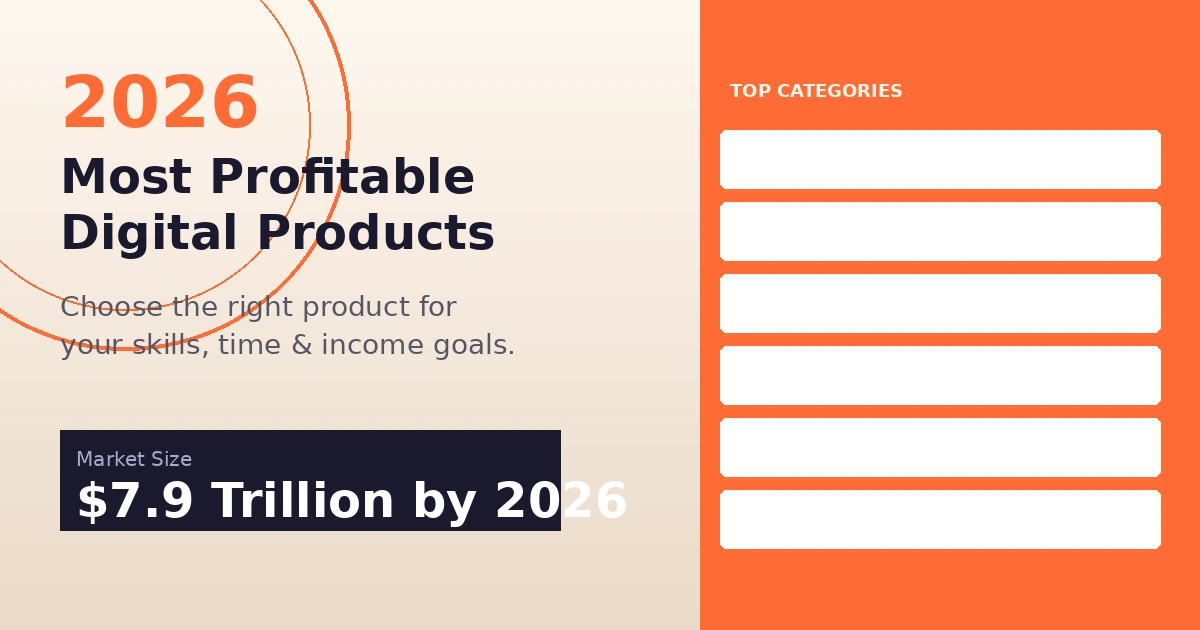
The digital economy is no longer a niche frontier—it is the mainstream marketplace. By 2026, the global digital commerce market is projected to surpass $7.9 trillion (Statista, 2024), driven by creator economies, remote work culture, and the explosive growth of AI tools. Whether you are a freelancer, educator, developer, or entrepreneur, digital products offer one of the lowest-barrier, highest-margin income streams available today.
This guide breaks down the most promising digital product ideas for 2026, who they are right for, what the data says, and how to get started. No fluff—just actionable intelligence.
Why Digital Products Are Dominating in 2026
Before diving into specific ideas, it is worth understanding why this moment is particularly powerful for digital product creators.
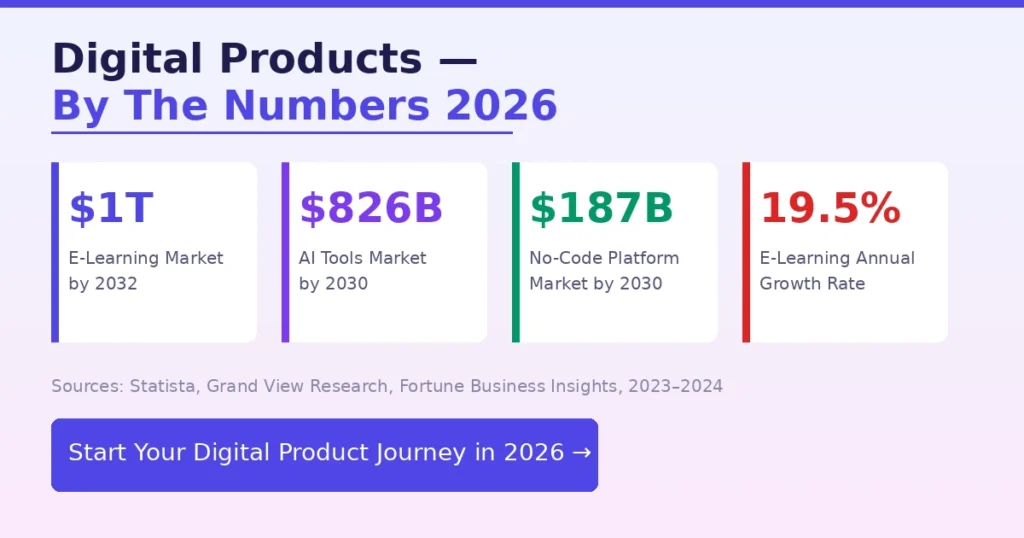
According to a 2024 report by Grand View Research, the e-learning market alone is expected to reach $1 trillion by 2032, growing at a CAGR of 19.5%. Meanwhile, the global no-code/low-code platform market is projected to hit $187 billion by 2030. People are building, learning, and buying digitally at an unprecedented pace.
The shift is structural, not cyclical. Remote work, AI adoption, and creator monetization platforms have permanently altered how knowledge and tools are exchanged. The barrier to entry for digital products has never been lower, while the demand has never been higher.
Digital Product Profitable Ideas 2026
1. AI-Powered Micro-Tools and Utilities
The AI wave is not slowing down—but the opportunity has shifted from building foundational models to building narrow, useful tools on top of them. Think niche AI writing assistants for lawyers, AI resume reviewers for niche industries, or AI-generated meal planners for specific dietary needs.
These micro-tools require no coding background if built with platforms like Bubble, Glide, or Pico. Creators are monetizing them via one-time purchase or subscription through Gumroad, LemonSqueezy, or their own storefronts.
Market signal: The AI tools market is projected to reach $826.7 billion by 2030 (Fortune Business Insights, 2023).
2. Notion & Productivity Templates
Notion crossed 35 million users in 2024, and template sales have become a legitimate income stream. Creators sell second-brain systems, project trackers, CRM dashboards, and business operating systems—all as downloadable Notion templates.
The sweet spot in 2026 is hyper-niche templates: think “Notion dashboard for independent insurance agents” or “freelance video editor client portal.” Niche depth beats broad appeal in a saturated market.
Average pricing: $7–$97 per template
Top sellers on Gumroad: Earn $5,000–$50,000/month from template bundles
3. Online Courses and Cohort-Based Learning
Online courses remain one of the most scalable digital products. The key in 2026 is not just recorded content—it is transformation-focused curriculum that delivers measurable outcomes.
Cohort-based courses (CBCs) on platforms like Maven have grown in popularity because they create accountability, community, and completion rates far above solo self-paced courses. Maven reported an average cohort earning $43,000 per launch in 2023.
High-demand course topics for 2026 include:
- AI prompt engineering and workflow automation
- Personal finance for Gen Z and millennials
- UX design for non-designers
- Sustainable business practices
- Short-form video content strategy
4. Digital Art, Illustrations, and Printables
Printable planners, wall art, educational worksheets, and SVG files continue to be a massive segment. On Etsy alone, digital downloads account for a growing share of the platform’s $2.7 billion in annual GMS (Etsy Annual Report, 2023).
In 2026, creators who combine AI-assisted design tools (Midjourney, Adobe Firefly) with strong niche targeting are outperforming traditional designers in volume. Seasonal printables, teacher resources, and self-care journals are particularly high-converting.
5. Ebooks and Digital Guides
Ebooks are far from dead—they have just evolved. The winning ebooks in 2026 are not 300-page encyclopedias. They are 30–80 page actionable guides with checklists, frameworks, and case studies that solve a specific pain point fast.
Topic areas with high conversion:
- Side hustle blueprints
- Parenting and homeschool resources
- Health and wellness protocols
- B2B industry-specific playbooks
Platforms like Amazon KDP, Payhip, and Gumroad all support direct-to-consumer ebook sales with zero inventory.
6. Stock Media: Photos, Videos, Music, and Sound Effects
Content creators, marketers, and brands have an insatiable appetite for fresh, high-quality assets. Stock media libraries on platforms like Pond5, Shutterstock contributor programs, and Musicbed remain a passive income staple.
The 2026 angle: AI-assisted stock production. Creators using tools like Suno (AI music), ElevenLabs (voiceovers), and RunwayML (AI video) are producing stock assets at a fraction of traditional costs. Licensing these to businesses and creators is a scalable revenue stream.
7. SaaS Products Built with No-Code Tools
Software-as-a-Service (SaaS) used to require a development team. In 2026, solo founders are launching profitable micro-SaaS products using tools like Bubble, Webflow, Softr, and Glide.
Data point: The micro-SaaS market is growing at approximately 17% annually, with solo founders increasingly accounting for a share of that growth (Indie Hackers, 2024).
8. Membership Communities and Digital Subscriptions
Recurring revenue is the holy grail of digital products. Membership platforms like Circle, Skool, and Patreon have made it easy for experts and creators to build paid communities around a shared interest or skill.
A well-positioned membership site offering exclusive content, live calls, and peer networking can command $19–$199/month per member. Even a modest 200-member community at $49/month generates nearly $10,000 in monthly recurring revenue.
Digital Product Market Comparison Table
| Product Type | Avg. Price Range | Passive Income Potential | Time to Launch | Platform Examples |
| AI Micro-Tools | $9–$79/mo | High | 2–8 weeks | Gumroad, LemonSqueezy |
| Notion Templates | $7–$97 | Very High | 1–2 weeks | Gumroad, Etsy |
| Online Courses | $97–$997 | High | 4–12 weeks | Teachable, Maven |
| Printables/Digital Art | $2–$25 | Very High | 1 week | Etsy, Creative Market |
| Ebooks | $7–$49 | High | 2–4 weeks | Amazon KDP, Payhip |
| Stock Media | Per license | Medium | Ongoing | Shutterstock, Pond5 |
| Micro-SaaS | $29–$199/mo | Very High | 4–16 weeks | Direct, AppSumo |
| Memberships | $19–$199/mo | High | 2–6 weeks | Circle, Skool, Patreon |
How to Validate Your Digital Product Idea Before Building
Research Before You Create
The most common mistake digital product creators make is building in isolation. Before investing time, validate using:
- Reddit and Quora: Search your niche + “struggling with” or “looking for”
- Google Trends: Check search volume trajectory over 12 months
- Etsy/Gumroad: Look for similar products with high review counts (proof of demand)
- X (Twitter) and LinkedIn: Monitor what questions your target audience asks repeatedly
The Pre-Sale Method
One of the fastest validation tactics is the pre-sale. Create a simple landing page, describe the product, set a price, and accept payments before you build. If nobody buys, you have lost nothing but a weekend. If 20 people pay $47, you have $940 and a clear signal to build.
People Also Ask(FAQ’s)
Q: What is the most profitable digital product to sell in 2026?
AI-powered micro-tools and niche online courses consistently generate the highest revenue per unit. However, profitability depends heavily on audience alignment and marketing. Notion templates and printables often offer the best ROI for beginners due to low production time.
Q: Can I sell digital products without a following?
Absolutely. Platforms like Etsy, Gumroad, and AppSumo have built-in traffic. Many creators generate their first sales through SEO-optimized product listings before building any social media presence.
Q: How much money can you make selling digital products?
Income varies widely. Beginners may earn $200–$1,000/month. Experienced creators in the right niches can generate $10,000–$100,000+ monthly. According to Gumroad’s Creator Data (2023), the top 1% of creators on their platform earn over $1 million annually.
Q: Do I need technical skills to create digital products?
Not necessarily. Ebooks, templates, printables, and courses require minimal technical knowledge. For micro-SaaS, no-code tools like Bubble and Softr have significantly lowered the technical barrier.
Q: What platforms are best for selling digital products in 2026?
Top platforms include Gumroad (all-in-one), Etsy (built-in audience for creative products), Teachable/Kajabi (courses), Patreon/Circle (memberships), and Amazon KDP (ebooks). Many creators sell directly via their own websites using Shopify or Webflow + payment integrations.
Digital Product Profitable Ideas 2026
The digital product landscape in 2026 rewards creators who combine niche depth, genuine value, and strategic distribution. The best product is not the most complex—it is the one that solves a specific, painful problem for a clearly defined audience.
Start with one idea, validate it quickly, and iterate. The creators winning in 2026 are not waiting for perfect conditions. They are shipping, learning, and growing.
Authoritative References
- Statista (2024). Global Digital Commerce Market Revenue Forecast 2026. https://www.statista.com
- Fortune Business Insights (2023). Artificial Intelligence Market Size, Share & COVID-19 Impact Analysis. https://www.fortunebusinessinsights.com
- Etsy Inc. (2023). Annual Report: Gross Merchandise Sales and Seller Data. https://investors.etsy.com
- Maven (2023). State of Cohort-Based Courses Report. https://maven.com
- Indie Hackers (2024). Micro-SaaS Growth and Solo Founder Trends. https://www.indiehackers.com
- Gumroad (2023). Creator Economy Data Report. https://gumroad.com